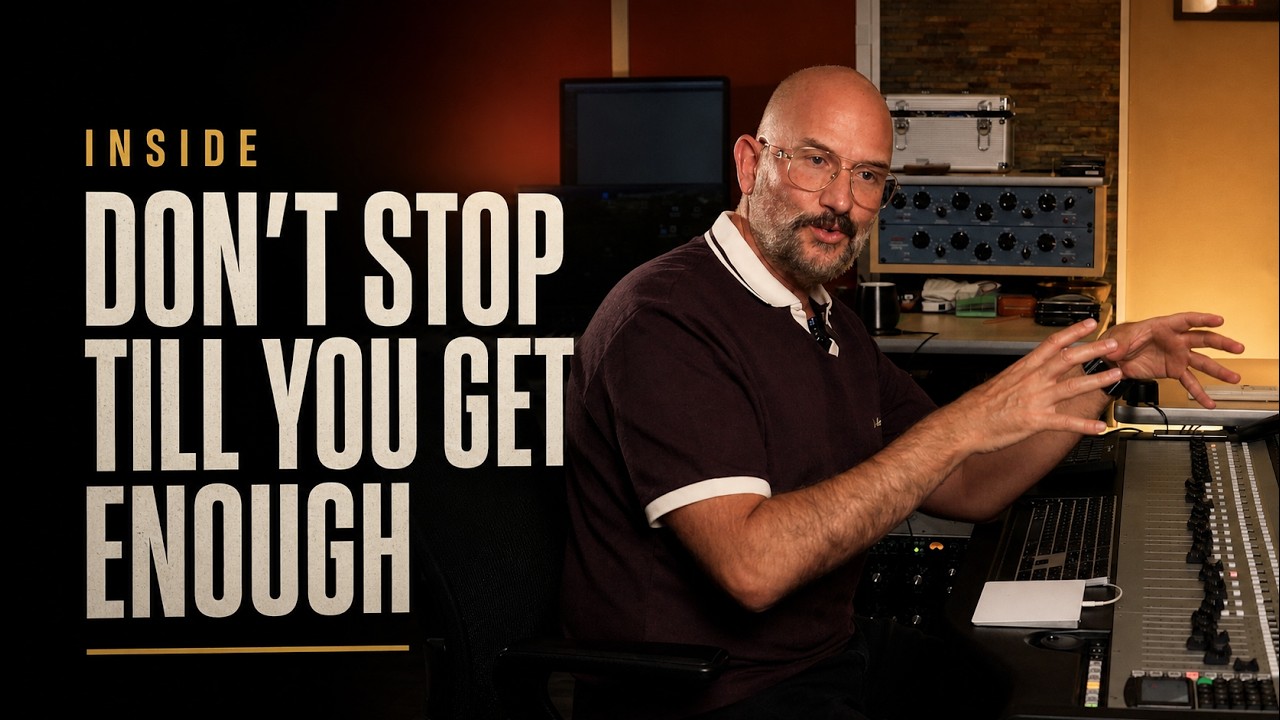
Inside the Song

Dentro de "Don't Stop 'Til You Get Enough": cómo se construyó el disco

Escucha esta otra vez. "Don't Stop 'Til You Get Enough", de Off the Wall, el primer disco de Michael como artista solista.

Pasé meses dentro de este catálogo remezclándolo en Dolby Atmos con Humberto Gatica, que estuvo allí con Michael y con Quincy en los originales. Ese trabajo significa oír estas canciones como casi nadie las oye: elemento a elemento, sin los cincuenta años de masterizado en estéreo pegados por encima. Esto es lo que se ve desde ahí dentro.

Por qué existe este disco
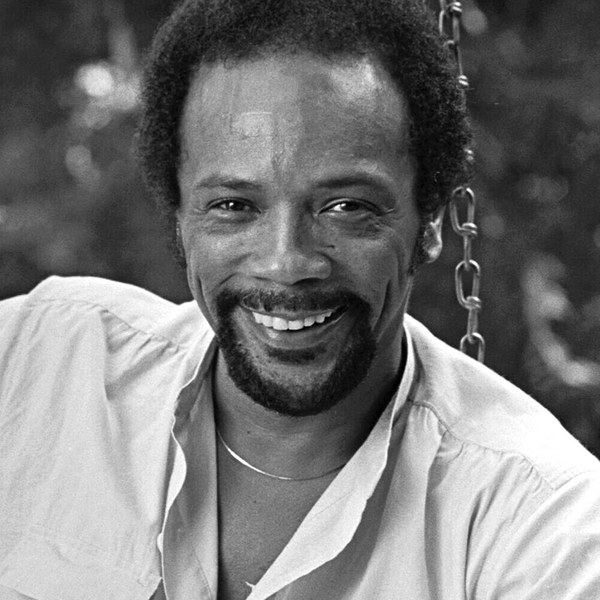
Retrato de Quincy Jones
Quincy Jones en 1980, el año siguiente a Off the Wall. Foto: Los Angeles Times, CC BY 4.0.

En 1979 Michael se había pasado la vida entera haciendo discos con sus hermanos. Para el suyo fue a la discográfica y pidió a Quincy Jones, que por entonces era conocido sobre todo como arreglista de jazz. A la gente le pareció una pareja rara. De ahí salió Off the Wall, y esta canción le dio su primer Grammy en solitario.

Todo el mundo lo archiva como disco. No lo es, o por lo menos llamarlo así no sirve de nada. El disco es un ritmo que puedes nombrar. Esto es un tren que sale de la estación y no para, y cada decisión del disco existe para que no te quieras bajar.

Aquí nadie toca el groove

Aquí es donde casi todo el mundo se equivoca cuando intenta montar algo así. El instinto es que cada instrumento toque la figura entera. Todos encajados en el mismo patrón, de principio a fin. Y te sale algo rígido, alto y muerto.

Este disco hace lo contrario. Cada elemento toca solo una parte del groove. La batería lleva un trozo. El bajo lleva otro. La percusión, un tercero. Nadie está tocando el groove. El groove solo existe donde se solapan todos.

Aísla las partes una a una y todas suenan un poco incompletas. Vuelve a juntarlas y hay más ritmo del que ningún músico es responsable por su cuenta. Por eso respira, y por eso aguanta seis minutos sin cansarte. Es una decisión de composición, no de mezcla.

Dos acordes, y uno es una pregunta

De armonía aquí no hay casi nada. Es un vamp entre Si mayor y un La sobre Si: una nota de bajo aguantando debajo mientras el acorde de arriba se mueve, lo que convierte al segundo acorde en una suspensión que nunca resuelve del todo.

Dos compases en Si mayor: el acorde de Si y un La sobre Si, con la misma nota de bajo aguantando debajo de los dos 1 · el acorde B 2 · la pregunta A / B
La nota del bajo no se mueve. Lo que cambia es el acorde de encima, y eso es lo que convierte el segundo compás en una pregunta.

Ese es el motor. Una suspensión es una pregunta, y como la canción no deja de hacerla y no deja de negarse a contestar, la música no tiene dónde sentarse. No puedes terminar una frase con una pregunta. Así que sigue, y tú también.

Si escribes música, párate un segundo aquí. La simplicidad armónica no es una limitación que el disco supere. Es la razón de que el disco funcione. Toda la complejidad se mudó al ritmo y a la orquestación, donde puede acumularse sin fin sin necesitar resolver nunca.

Todo le responde a algo

Retrato de Jerry Hey
Jerry Hey, autor de los metales. Foto: Kamasami Kong, CC0.

Escucha cómo se hablan las partes. Cada elemento tiene su hueco, su ranura en el compás donde no hay nadie más. Las guitarras entran y se sientan en un sitio. Más tarde llega un clavinet y hace contrapunto contra la guitarra, no al lado.

Contrapunto es la palabra que importa. No son capas apiladas haciendo el mismo trabajo en frecuencias distintas. Son voces separadas en una conversación, y cada una deja sitio para la respuesta. Eso es una costumbre de arreglista, y ahí se oyen los años de jazz de Quincy con más claridad que en cualquier acorde de la canción.

Donde mejor se ve es en las cuerdas. Lo obvio sería una figura que baja y vuelve a subir por el mismo camino. No lo hace. La forma cambia, y el acercamiento cromático aterriza donde tu oído no lo esperaba. Parece una repetición y no lo es, que es justo por lo que aguanta en la escucha número cuarenta. La escritura de metales de Jerry Hey hace el mismo trabajo una octava más arriba.

Michael es parte de la sección rítmica

La voz principal no está sentada encima del groove. Está dentro.

Michael les cantaba todas las partes a los músicos, líneas de bajo, figuras de vientos, ideas de percusión, porque el arreglo estaba terminado en su cabeza antes de que nadie lo escribiera. Esa costumbre se oye en cómo entrega esta canción. Las respiraciones son eventos rítmicos. Los ruidos vocales caen en subdivisiones concretas. Nada de eso es decoración.

Si alguna vez te caen las pistas en las manos, haz esto, porque es lo más convincente del disco. Coge la batería, el bajo y la percusión solos. Groove precioso, completo, satisfactorio. Ahora no añadas nada más que las palmas y su voz con toda la respiración dentro. Lo que llega es completamente desproporcionado respecto a lo que acabas de añadir. En ese punto puedes parar. El tema no necesita nada más.

Lo que le dio el Atmos de verdad

Al pasarlo a inmersivo, la norma fue conservar las decisiones originales de izquierda y derecha. Donde estuviera un elemento en la mezcla estéreo, ahí es donde pertenece. El inmersivo no es un permiso para redecorar el disco de otro.

Lo que cambia es la separación. La sección rítmica y el bajo se quedan anclados en la pared frontal, porque ese es el suelo que pisa todo lo demás. La percusión sube un poco. El clavinet y la guitarra se abren hacia los lados para que por fin puedas oírlos discutir.

Nada de eso inventa nada. Esas relaciones estaban en el arreglo desde siempre: el contrapunto, las figuras que responden, el groove repartido. Lo que pasa es que el estéreo no tenía sitio para enseñarlas. Dale espacio al disco y se explica solo.

Todo es un gancho

Da un paso atrás y la forma es evidente. Empieza con el groove. Cada elemento recibe un sitio. El estribillo añade coros y respuestas cortas de vientos. Las cuerdas llegan y luego se ganan el sueldo levantando la segunda estrofa por encima de la primera.

Y casi cada parte es un gancho. La figura de guitarra es un gancho. El teclado que se repite es un gancho. La línea de cuerda es un gancho. Las palmas son un gancho. Ya avanzada la canción entra una segunda parte de palmas que se apila contra la primera y, con la percusión debajo, tienes tres ganchos rítmicos entrelazados sonando a la vez.

Ahí tienes la respuesta a cómo una canción de dos acordes dura tanto. No es una idea estirada. Son una docena de ideas pequeñas, todas terminadas, superpuestas para que algo nuevo no deje de llegar y nada tenga que irse nunca.

Transcripción completa (en inglés)
  1. 0:00 Listen to this
  2. 0:18 This is don't stop till you get enough from the album off the wall
  3. 0:22 I don't know if you guys know the backstory about this if you don't go watch the movie Michael
  4. 0:26 Off the wall is Michael's first album as a solo artist
  5. 0:31 Beyond what he had done before with his brothers for this
  6. 0:35 He tells the record label that he wants producer Quincy Jones
  7. 0:38 Which was very very very well known in the jazz world as an arranger incredible producer
  8. 0:44 But this was kind of like seen as a weird combination what they did together is just not only brilliant
  9. 0:50 I mean, it's history of music. So this song was actually Michael's first Grammy as a solo artist and
  10. 0:58 This is beyond disco. This is just cuz this is 1979
  11. 1:02 This is just a train that starts and doesn't stop and you just want to stay there
  12. 1:06 You never want to get off
  13. 1:07 So how do they accomplish this the main driver of all this is of course the groove which we have here
  14. 1:14 John "JR" Robinson on the drums and we have bass here
  15. 1:20 Greg Phillinganes
  16. 1:24 Then we have
  17. 1:26 Very very very famous very key part of this group is actually the incredible Sheila E with these percussions
  18. 1:34 That you see here
  19. 1:44 That just becomes the integral part of it look at that just with the claps
  20. 1:50 So
  21. 1:59 Basically, this is just a
  22. 2:01 Foundation that just keeps going and going and going and going the secret to this is actually not that every element does every part
  23. 2:09 It's like how many different elements do parts of that one groove and how they all come together to become this
  24. 2:15 Soup so to speak in the song you have basically it's just a jam between
  25. 2:21 the major chord in B
  26. 2:24 and the sus B major and a over B
  27. 2:29 Which makes it a sus and that's a holding
  28. 2:39 See I'll show you one more time just from bass
  29. 2:46 The drums
  30. 2:50 Percussion
  31. 2:54 You have the guitars
  32. 2:57 They're gonna come in here
  33. 3:09 Listen how well everything talks to each other everything has its own pocket
  34. 3:13 there's a later part where there's a keyboard a clavinet that comes in here and then it does the counterpoint to the
  35. 3:21 to the guitar
  36. 3:28 Basically we have here in Atmos we actually did we are preserving the original left right where wherever it was on the stereo mix
  37. 3:35 But then now we're separating things. So now we have this interesting
  38. 3:39 Dialogue between the percussion a little bit elevated the drums and the bass obviously on the on the foundation in the front wall
  39. 3:46 And then we have this clavinet and guitar conversation going a little bit on the wider side
  40. 3:51 It's it's really fun phenomenal if this just goes forever and you're just happy to be there
  41. 4:06 Obviously the main element is Michael Michaels voice in his performance and how he actually is the groove as you may know
  42. 4:13 He would sing every part to the musicians the producers like all the ideas
  43. 4:17 They had in his head and he uses that his breaths his noises as a part of the group
  44. 4:22 Just listen to how he's delivering
  45. 4:24 How he's delivering the vocals with the groove integrated
  46. 4:31 There's naps
  47. 4:36 Oh
  48. 4:41 Look at the cars
  49. 4:57 Just brilliant how his energy even look at this the groove is super happening, but when you listen to the
  50. 5:04 Let's just do the drums bass in the percussion, right?
  51. 5:11 Beautiful but look at the energy that comes look at the energy that comes when I just bring on his clap
  52. 5:26 To that which is open his vocal with all his breathing and groove and you're done you don't need anything else
  53. 5:34 Oh
  54. 5:47 Again we see in the song how we start with the groove how everything has a place and how it keeps building
  55. 5:52 How we layer in the chorus the backgrounds the horn little answers and then obviously in this song everything is a hook the guitar part
  56. 6:00 Is a hook the keyboard just repeating as a hook, but then we have
  57. 6:04 genius of Quincy Jones the strings
  58. 6:19 That it's not the same going down then going up
  59. 6:24 And that's the hook
  60. 6:28 and then
  61. 6:29 The chromatic approach is in a different place. So it feels kind of like it's the same but it's not right
  62. 6:52 The layer of the brass brilliant Jerry Hey
  63. 6:58 Together with the strings
  64. 7:08 Once we have the strings already introduced in the song the second verse
  65. 7:11 They actually play a very important role in lifting the second verse compared to the first one. They have a
  66. 7:22 Have this beautiful line
  67. 7:28 One of my favorite moments it's towards the end when we are just jamming, right?
  68. 7:50 What happens between the guitar that we've been hearing
  69. 7:55 The clapping it that we had and then there's an extra clapping it part that comes in look at these three elements together
  70. 8:10 Together with the percussion those bottles that we talked about
  71. 8:24 This genius it just keeps going and going don't stop 'til you get enough
  72. 8:33 Can we talk about Greg Phillinganes and this bassline look at this
  73. 8:54 I'm gonna review some of these other gems from off the wall and also as well as from the other albums
  74. 9:01 Let me know in the comments which song is your favorite that you would like me to do next. Thanks for watching
  75. 9:06 Don't forget to like and subscribe