Inside the Song

Inside "Don't Stop 'Til You Get Enough": How the Record Was Built

Listen to this one again. "Don't Stop 'Til You Get Enough", from Off the Wall, Michael's first album as a solo artist.

I spent months inside this catalogue remixing it in Dolby Atmos with Humberto Gatica, who was there with Michael and Quincy on the originals. That work means hearing these songs the way almost nobody hears them: one element at a time, without the fifty years of stereo mastering glued on top. Here's what this one looks like from in there.

Why the record exists at all
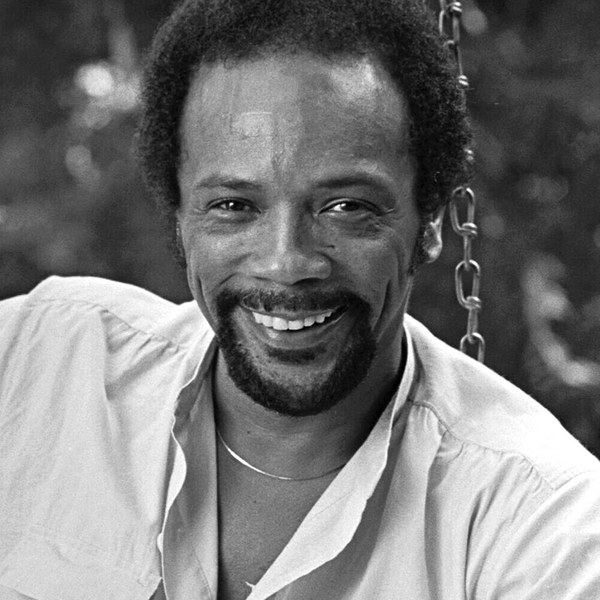
Portrait of Quincy Jones
Quincy Jones in 1980, the year after Off the Wall. Photo: Los Angeles Times, CC BY 4.0.

By 1979 Michael had spent his entire life making records with his brothers. For his own album he went to the label and asked for Quincy Jones, who at that point was known above all as a jazz arranger. People thought it was a strange pairing. What came out of it was Off the Wall, and this song won him his first Grammy as a solo artist.

Everyone files it under disco. It's not, or at least that's not a useful thing to call it. Disco is a rhythm you can name. This is a train that pulls out of the station and never stops, and every decision on the record exists to keep you from wanting to get off.

Nobody plays the groove

Here's where most people go wrong when they try to build something like this. The instinct is to have every instrument play the whole figure. Everybody locked to the same pattern, all the way through. You get something rigid and loud and dead.

This record does the opposite. Each element plays only part of the groove. The drums hold one piece. The bass holds another. The percussion holds a third. Nobody is playing the groove. The groove only exists where all of them overlap.

Solo the parts one at a time and every one of them sounds slightly incomplete. Put them back together and there's more rhythm happening than any single player is responsible for. That's why it breathes, and that's why it can run six minutes without tiring you out. It's a composition decision, not a mixing one.

Two chords, and one of them is a question

Harmonically there's almost nothing here. It's a vamp between B major and an A over B: a bass note holding underneath while the chord above it moves, which turns the second chord into a suspension that never properly resolves.

Two bars in B major: a B chord and an A over B, with the same bass note held under both 1 · the chord B 2 · the question A / B
The bass note never moves. What changes is the chord on top, and that is what turns the second bar into a question.

That's the engine. A suspension is a question, and because the song keeps asking it and keeps refusing to answer, the music has nowhere to sit down. You can't end a phrase on a question. So it keeps going, and so do you.

If you write music, sit with that for a second. The harmonic simplicity isn't a limitation the record overcomes. It's the reason the record works. All the complexity got moved into rhythm and orchestration, where it can pile up forever without ever needing to resolve.

Everything is answering something else
Portrait of Jerry Hey
Jerry Hey, who wrote the brass. Photo: Kamasami Kong, CC0.

Listen to how the parts talk. Every element has its own pocket, its own slot in the bar that nothing else is standing in. The guitars come in and sit in one place. Later a clavinet arrives and plays counterpoint against the guitar, not alongside it.

Counterpoint is the word that matters. These aren't layers stacked up doing the same job at different frequencies. They're separate voices in a conversation, and each one leaves room for the reply. That's an arranger's habit, and you can hear Quincy's jazz years in it more clearly than in any chord in the song.

The strings show it best. The obvious move would be a figure that goes down and comes back up the same way. It doesn't. The shape changes, and the chromatic approach lands somewhere your ear wasn't expecting. It feels like a repeat and it's not one, which is exactly why it still holds up on the fortieth listen. Jerry Hey's brass writing is doing the same job an octave up.

Michael is part of the rhythm section

The lead vocal isn't sitting on the groove. It's in it.

Michael sang every part to the musicians, bass lines, horn figures, percussion ideas, because the arrangement was finished in his head before anybody wrote it down. You can hear that habit in how he delivers this song. The breaths are rhythmic events. The vocal noises land on specific subdivisions. None of it's decoration.

If you ever get your hands on the stems, do this, because it's the most convincing thing on the record. Take the drums, the bass and the percussion on their own. Beautiful groove, complete, satisfying. Now add nothing except the handclaps and his voice with all the breathing left in. What arrives is completely out of proportion to what you just added. At that point you can stop. The track doesn't need anything else.

What Atmos actually gave it

Going immersive, the rule was to keep the original left-right decisions. Wherever an element sat in the stereo mix, that's where it belongs. Immersive isn't permission to redecorate somebody else's record.

What changes is separation. Rhythm section and bass stay anchored on the front wall, because that's the floor everything else is standing on. Percussion lifts a little. The clavinet and the guitar open outward to the sides so you can finally hear them arguing.

None of that invents a thing. Those relationships were in the arrangement all along, the counterpoint, the answering figures, the split-up groove. Stereo just had no room to show them. Give the record space and it explains itself.

Everything is a hook

Step back and the shape is obvious. It starts with the groove. Every element gets a place. The chorus adds backgrounds and short horn answers. The strings arrive and then earn their keep by lifting the second verse above the first.

And nearly every part is a hook. The guitar figure is a hook. The repeating keyboard is a hook. The string line is a hook. The clapping is a hook. Late in the song a second clapping part comes in and stacks against the first, and with the percussion underneath you have three interlocking rhythmic hooks running at the same time.

That's your answer for how a song with two chords runs this long. It's not one idea stretched out. It's a dozen small ideas, every one of them finished, layered so something new keeps arriving and nothing ever has to leave.

Full transcript
  1. 0:00 Listen to this
  2. 0:18 This is don't stop till you get enough from the album off the wall
  3. 0:22 I don't know if you guys know the backstory about this if you don't go watch the movie Michael
  4. 0:26 Off the wall is Michael's first album as a solo artist
  5. 0:31 Beyond what he had done before with his brothers for this
  6. 0:35 He tells the record label that he wants producer Quincy Jones
  7. 0:38 Which was very very very well known in the jazz world as an arranger incredible producer
  8. 0:44 But this was kind of like seen as a weird combination what they did together is just not only brilliant
  9. 0:50 I mean, it's history of music. So this song was actually Michael's first Grammy as a solo artist and
  10. 0:58 This is beyond disco. This is just cuz this is 1979
  11. 1:02 This is just a train that starts and doesn't stop and you just want to stay there
  12. 1:06 You never want to get off
  13. 1:07 So how do they accomplish this the main driver of all this is of course the groove which we have here
  14. 1:14 John "JR" Robinson on the drums and we have bass here
  15. 1:20 Greg Phillinganes
  16. 1:24 Then we have
  17. 1:26 Very very very famous very key part of this group is actually the incredible Sheila E with these percussions
  18. 1:34 That you see here
  19. 1:44 That just becomes the integral part of it look at that just with the claps
  20. 1:50 So
  21. 1:59 Basically, this is just a
  22. 2:01 Foundation that just keeps going and going and going and going the secret to this is actually not that every element does every part
  23. 2:09 It's like how many different elements do parts of that one groove and how they all come together to become this
  24. 2:15 Soup so to speak in the song you have basically it's just a jam between
  25. 2:21 the major chord in B
  26. 2:24 and the sus B major and a over B
  27. 2:29 Which makes it a sus and that's a holding
  28. 2:39 See I'll show you one more time just from bass
  29. 2:46 The drums
  30. 2:50 Percussion
  31. 2:54 You have the guitars
  32. 2:57 They're gonna come in here
  33. 3:09 Listen how well everything talks to each other everything has its own pocket
  34. 3:13 there's a later part where there's a keyboard a clavinet that comes in here and then it does the counterpoint to the
  35. 3:21 to the guitar
  36. 3:28 Basically we have here in Atmos we actually did we are preserving the original left right where wherever it was on the stereo mix
  37. 3:35 But then now we're separating things. So now we have this interesting
  38. 3:39 Dialogue between the percussion a little bit elevated the drums and the bass obviously on the on the foundation in the front wall
  39. 3:46 And then we have this clavinet and guitar conversation going a little bit on the wider side
  40. 3:51 It's it's really fun phenomenal if this just goes forever and you're just happy to be there
  41. 4:06 Obviously the main element is Michael Michaels voice in his performance and how he actually is the groove as you may know
  42. 4:13 He would sing every part to the musicians the producers like all the ideas
  43. 4:17 They had in his head and he uses that his breaths his noises as a part of the group
  44. 4:22 Just listen to how he's delivering
  45. 4:24 How he's delivering the vocals with the groove integrated
  46. 4:31 There's naps
  47. 4:36 Oh
  48. 4:41 Look at the cars
  49. 4:57 Just brilliant how his energy even look at this the groove is super happening, but when you listen to the
  50. 5:04 Let's just do the drums bass in the percussion, right?
  51. 5:11 Beautiful but look at the energy that comes look at the energy that comes when I just bring on his clap
  52. 5:26 To that which is open his vocal with all his breathing and groove and you're done you don't need anything else
  53. 5:34 Oh
  54. 5:47 Again we see in the song how we start with the groove how everything has a place and how it keeps building
  55. 5:52 How we layer in the chorus the backgrounds the horn little answers and then obviously in this song everything is a hook the guitar part
  56. 6:00 Is a hook the keyboard just repeating as a hook, but then we have
  57. 6:04 genius of Quincy Jones the strings
  58. 6:19 That it's not the same going down then going up
  59. 6:24 And that's the hook
  60. 6:28 and then
  61. 6:29 The chromatic approach is in a different place. So it feels kind of like it's the same but it's not right
  62. 6:52 The layer of the brass brilliant Jerry Hey
  63. 6:58 Together with the strings
  64. 7:08 Once we have the strings already introduced in the song the second verse
  65. 7:11 They actually play a very important role in lifting the second verse compared to the first one. They have a
  66. 7:22 Have this beautiful line
  67. 7:28 One of my favorite moments it's towards the end when we are just jamming, right?
  68. 7:50 What happens between the guitar that we've been hearing
  69. 7:55 The clapping it that we had and then there's an extra clapping it part that comes in look at these three elements together
  70. 8:10 Together with the percussion those bottles that we talked about
  71. 8:24 This genius it just keeps going and going don't stop 'til you get enough
  72. 8:33 Can we talk about Greg Phillinganes and this bassline look at this
  73. 8:54 I'm gonna review some of these other gems from off the wall and also as well as from the other albums
  74. 9:01 Let me know in the comments which song is your favorite that you would like me to do next. Thanks for watching
  75. 9:06 Don't forget to like and subscribe