Inside the Song

Dentro de "Earth Song": la anatomía de un himno

¿Cómo consigue una canción pop tener la magnitud de una película?

"Earth Song", del disco HIStory, es el tema donde esa pregunta tiene una respuesta de verdad. Tuve el privilegio de mezclarlo en Dolby Atmos con Humberto Gatica, y al abrir estas multipistas descubres que no es un estribillo grande con un arreglo grande detrás. Es arquitectura. Cada elemento llega en el momento exacto en que la historia lo necesita, y ninguno llega antes de tiempo.

Además plantea una pregunta que sigue siendo actual, por desgracia, y me temo que lo va a seguir siendo durante bastante tiempo. Así que vamos a ver cómo Michael convirtió a la Tierra en la protagonista de la película.

Una canción que tardó siete años en llegar

La escribió en la habitación de un hotel de Viena, el uno de junio de 1988, en plena gira Bad. Por ahí circulan maquetas de aquella primera versión. No salió hasta 1995, en HIStory, siete años después.

El vídeo, dirigido por Nick Brandt, tuvo tanto impacto como el disco, y cuenta la historia al revés. Empieza por la destrucción, por todo lo que le hemos hecho al planeta, y según crece la canción va entrando en la curación, hasta que la naturaleza se restaura. La música hace lo mismo y en el mismo orden, y ahí está toda la idea.

Comparte forma con el análisis de Man in the Mirror: un principio muy íntimo que acaba en una explosión de coro, el mundo entero cantando junto. Lo que cambia es el camino hasta ahí.

La armonía se queda simple a propósito

Estamos en La bemol menor. El motivo de piano entra primero y trae la idea armónica de toda la estrofa antes de que Michael haya cantado una nota.

Y aquí está el truco: armónicamente la canción se queda simple, y toda la complejidad se va a las capas y a la orquestación según crece. Pero dentro de esa sencillez siempre hay algo. Vamos del uno al cuatro, y el cuatro es mayor, no menor. En una tonalidad menor el cuarto grado tendría que ser menor. Este no lo es.

Dos pentagramas en La bemol menor: el cuarto grado menor que pide la tonalidad y el cuarto grado mayor que suena en la canción, con la tercera subida a Fa natural 1 · lo que pide la tonalidad A m D m 2 · lo que suena A m D ♮6
El cuarto grado en La bemol menor, como lo escribe la tonalidad y como lo toca la canción. Se mueve una nota, y con ella cambia el modo.

Eso es un paralelo dórico: el mismo acorde con la tercera subida, que abre el color sin salirse de la tonalidad. Después vamos al cinco, y el cinco está metido dentro del propio riff. Tres acordes. Ese es el motor armónico de un disco que acaba sonando a banda sonora.

La primera estrofa no te da nada a lo que agarrarte

Michael y un piano. Ya está.

La interpretación está completamente desnuda, y tiene que estarlo, porque lo que describe la estrofa es lo roto que está el mundo. Él enseña la emoción y el arreglo se aparta. No hay nada sujetando el suelo, así que te acercas.

Entonces el pre-estribillo hace su movimiento. Vuelve al cuatro, pero esta vez al menor, al que de verdad pertenece a la tonalidad. Y apoyándose en ese acorde, la canción toca el relativo mayor durante un segundo. Se abre una ventana, entra luz, y se vuelve a cerrar. Todo el argumento armónico de la canción está ahí: el mismo grado, contado de dos maneras distintas.

El primer estribillo todavía no tiene batería
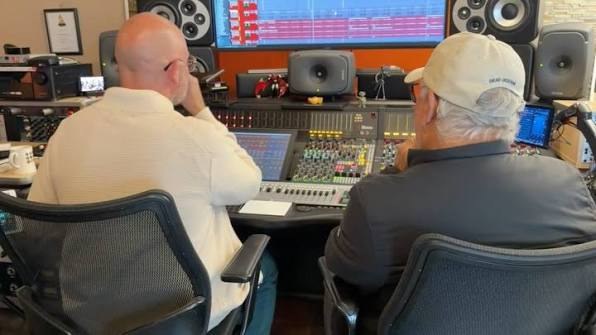
Carlos Rodgarman y Humberto Gatica en el estudio
Con Humberto Gatica, mezclando el catálogo de Michael Jackson en Dolby Atmos.

Llega la línea principal, la que todo el mundo recuerda, y sigue sin haber batería. Está el bajo, y está una pandereta que en Atmos coloqué un poco elevada, por encima del plano de todo lo demás.

Esa sola decisión cambia la sala. Los teclados y los pads ya están construyendo paisajes que se mueven de los hombros hacia delante, y sacar la pandereta de ese plano le da altura al estribillo antes de tener peso. Michael se queda delante. Siempre delante, en todas las secciones, por muy grande que se ponga todo a su alrededor.

La guitarra le responde

La segunda estrofa trae un invitado nuevo: la guitarra. Esa línea la has oído un millón de veces sin separarla nunca del disco, y lo que está haciendo es responderle a Michael, frase por frase, en los huecos que él deja. No es acompañamiento. Es una segunda voz en la conversación, y mete un color nuevo en una canción que hasta ahí solo tenía piano y pads.

Más adelante, en los estribillos, entra otra guitarra rasgueando, y casi nadie repara en ella. No está tocando armonía. Está llevando el tiempo. Se comporta como una percusión en una sección que a esas alturas todavía no tiene bastante.

La orquesta que nunca has llegado a oír
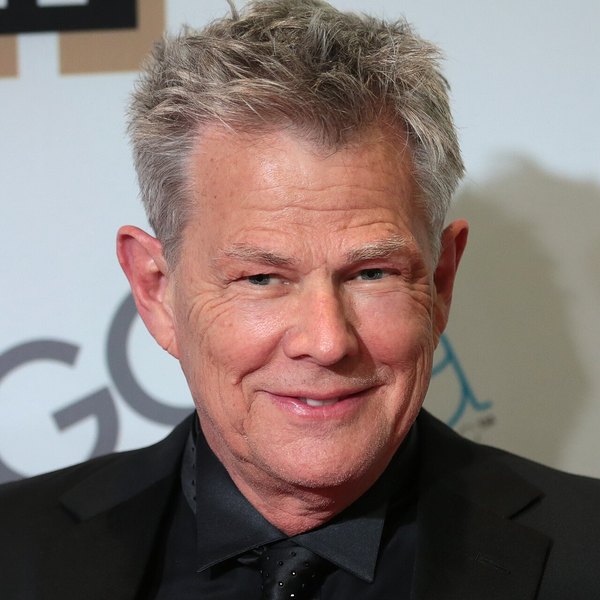
Retrato de David Foster
David Foster, que coprodujo el disco con Michael Jackson y Bill Bottrell. Foto: Gage Skidmore, CC BY-SA 3.0.

Aquí está la joya. Detrás de todo hay un arreglo orquestal completo que es espectacular, y está metido tan adentro de la mezcla que la mayoría de la gente no lo ha oído nunca de forma consciente.

Así lo diseñaron David Foster y Bill Bottrell con Michael, y funciona: las cuerdas no están para que las admires, están para empujar. Sácalas solas y oyes una escritura que sostendría una película. Devuélvelas a su sitio y ya no oyes cuerdas. Solo notas que la canción se hace más grande.

Separar esos elementos es el argumento para hacer este trabajo en inmersivo. No es espectáculo. Es recuperar información musical que llevaba en la cinta desde el primer día.

Su pie en el suelo

Retrato de Steve Ferrone
Steve Ferrone, cuya batería acústica es la que se quedó en el disco. Foto: Davidwbaker, CC BY-SA 4.0.

Deja solo a Michael justo antes del estribillo en el que entra la batería y pillas algo que no aparece en ninguna partitura: su pie en el suelo, sobre la palmada, preparando la entrada.

Está marcándole la entrada a la banda con el cuerpo, y se quedó grabado. Es el disco avisándote de que la batería va a llegar un compás antes de que llegue.

Y llega como Dios manda. La tocó Steve Ferrone, y merece la pena saber cómo se decidió: Michael quería batería electrónica, Ferrone pactó grabar una maqueta de cada manera, y cuando volvió la versión acústica Michael se puso a bailar por el estudio. Y con razón. Esa batería es la mitad de la envergadura de todo lo que viene después.

El puente baja en vez de subir

De una canción de este tamaño se espera que siga trepando. Esta hace lo contrario.

Para el puente la energía baja: piano y cuerdas, sosteniendo todo el conjunto con muy poco. Y detrás hay un pad de coro sintético sampleado, una textura de voces que no canta nada, ahí puesta para mantener el espacio caliente mientras el arreglo se vacía.

Es la misma lección que la del principio. Si quieres que el final se sienta enorme, tienes que estar dispuesto a ceder el suelo una vez más antes de llegar.

Un tono entero arriba

La mejor manera de elevar una canción sigue siendo la más antigua. Cambio de tono.

Un tono entero hacia arriba, directo, sin preparación, hasta Si bemol menor. Sin acorde pivote, sin rampa: la canción simplemente se planta más arriba y sigue. Sale a menudo en las listas de los grandes cambios de tono del pop, y si funciona es por todo lo que viene antes. Cinco minutos de contención es lo que te compra un tono entero.

Y al salir, el turnaround también cambia. En vez de quedarse sentada en el cinco como ha hecho toda la canción, hace otra cosa en el camino de vuelta. Detalle pequeño. Es lo que impide que el final parezca un bucle.

El coro, y la octava de debajo

El coro es el de Andraé Crouch, y lo que hacen él y Michael en el clímax es llamada y respuesta. Él grita, ellos contestan. Vuelve a gritar, vuelven a contestar. Nadie está cantando una parte: hay dos fuerzas hablándose, y por eso el final suena a multitud y no a producción.

Por debajo de todo, el bajo lleva mezclada una suboctava, así que cada nota está doblada una octava más grave de lo que crees estar oyendo. Lo tocó Guy Pratt, y esa octava baja es lo que impide que una sección tan fuerte se quede delgada.

Escucha la interpretación de Michael a lo largo de todo el disco. Empezó tan íntimo como se puede empezar. A estas alturas está gritando, y no suena a esfuerzo. Suena a convicción, que es mucho más difícil de grabar.

Termina en una pregunta

Esto ya es mi interpretación personal.

La canción acaba en el acorde de dominante, sin resolver. Se queda ahí colgado, en el aire, y el disco se para.

Dos pentagramas en Si bemol menor: la dominante resolviendo al acorde de tónica, y la misma dominante seguida de un silencio con calderón 1 · la resolución que esperas F 7 B m 2 · lo que hace la canción F 7
La dominante de Si bemol menor, y el acorde de tónica que no llega nunca.

Para mí es la canción diciendo una última cosa: esto es una pregunta abierta. ¿Cómo la resolvemos? Depende de nosotros. Musicalmente es genial, porque la armonía se niega a darte la tranquilidad que el arreglo lleva todo el disco construyendo. No te llevas un cierre. Te llevas deberes.

Lo que hay que llevarse

La magnitud no es volumen, y no son más instrumentos.

Es una armonía simple en la que puedes confiar, un modo prestado para un solo acorde para que lo simple no aburra nunca, y un arreglo que suma un elemento cada vez en el orden exacto que pide la historia. Es una orquesta dispuesta a ser invisible, un batería dispuesto a llevarle la contraria al jefe, y un cantante cuyo pie en el suelo acabó en la mezcla final.

Y es la seguridad para terminar en un acorde que no resuelve, porque la pregunta que hace la canción tampoco está resuelta.

Transcripción completa (en inglés)
  1. 0:00 How can you have a pop song have the magnitude of a movie?
  2. 0:04 This is a song that actually raises a question that is still current today unfortunately and I have a feeling it's going to be current for some time.
  3. 0:12 In this song, let's just see how Michael had Earth be the main character of this movie.
  4. 0:17 Hi, I'm Carlos Rodgarman and today we're going to go inside Earth Song.
  5. 0:22 Michael Jackson song that I had the privilege of mixing in Dolby Atmos with Humberto Gatica.
  6. 0:28 As you may know, we've been remixing the whole pretty much whole catalog of Michael Jackson into Dolby Atmos and having access to this incredible music, I think it's worth exploring a little bit
  7. 0:39 And getting inside of it.
  8. 0:41 This is a song that has a long history actually because I believe it was first written around 1988 during the Bad tour and there's actually some demos floating around of this early version that
  9. 0:52 Michael did, but then it got released in 1995 on the album HIStory.
  10. 0:57 I still remember today the video that it really made as much an impact as the song itself.
  11. 1:04 It really had an incredible message.
  12. 1:06 This has a similar dynamic to the other song that we analyzed in another episode, Man in the Mirror, in how they develop things from a very intimate beginning to an explosion of a choir
  13. 1:18 And it's just the world is singing together.
  14. 1:20 This song keeps bringing the listener as a witness to the story.
  15. 1:24 The video was beautifully done and it actually has a reverse kind of storyline.
  16. 1:29 So we start from all the destruction, all that we've done to the Earth, right?
  17. 1:33 And then it starts from showing all the brokenness and as we progress in the song and the song grows, we actually go into the healing and we start to see how nature everything gets restored.
  18. 1:44 It's a beautiful concept of a song and beautiful concept of a video.
  19. 1:49 In the intro we have as we all know this effects and we start on this very dreamy kind of ambience.
  20. 2:10 We're going to bring the piano motif that is going to bring us the first harmonic ideas of the of the verse.
  21. 2:18 The trick in this song is that harmonically it just stays kind of simple and the complexity starts on the layers and the orchestration as we grow.
  22. 2:27 But always there's like a little something to that simple, right?
  23. 2:30 We're in A flat minor, right?
  24. 2:34 With the riff that we remember from the intro.
  25. 2:50 Here in the verse there's something interesting happening.
  26. 2:52 This is for my harmony friends.
  27. 2:54 We're in A flat minor.
  28. 2:56 We go one four, but the four is major not minor.
  29. 3:00 So we're doing a parallel from what it should be right to a Dorian parallel.
  30. 3:09 And then we go to the fifth.
  31. 3:14 It's embedded in the riff.
  32. 3:30 We can see how intimate Michael singing on the first verse.
  33. 3:36 What about sunrise? What about rain with a piano?
  34. 3:43 What about all the things that you said we were gain?
  35. 3:50 What about and So you see how we're stripped down completely.
  36. 3:59 It's just Michael. He shows his emotion, the brokenness of the world that we're seeing.
  37. 4:04 What are we doing to it?
  38. 4:05 On the pre-chorus, we do a shift.
  39. 4:07 We go to the four, right?
  40. 4:09 But we go actually to the minor, which is what it what it belongs in the key.
  41. 4:13 So, we go we're we're going for the major relative for a second, right?
  42. 4:38 And then we go into the main chorus, the main line, right?
  43. 4:41 That keeps repeating and evolving.
  44. 4:44 We all remember this So
  45. 4:57 The first chorus we still have no drums.
  46. 4:59 We have the bass.
  47. 5:00 We have just a tambourine that actually in Atmos we placed it a little bit elevated.
  48. 5:05 We're creating some really in amazing landscapes between the keyboards and the pads.
  49. 5:10 How it all interacts from the shoulders to the front.
  50. 5:13 Michael in the front always.
  51. 5:15 For the second verse we have a new special guest which is the guitar.
  52. 5:19 It's this. You've heard it a million times, right?
  53. 5:26 And then it answers Michael what about all the peace that you only So
  54. 5:46 We can see in the context of the production and the mix how that guitar plays that answer to Michael in the second verse.
  55. 5:53 So it brings this new What have we done to the world?
  56. 6:02 Look what we've done.
  57. 6:07 So for this, we start to build up.
  58. 6:09 The drums are about to come in.
  59. 6:10 Look at the strings in the orchestra.
  60. 6:12 There's actually another gem.
  61. 6:14 It's how the orchestra arrangement is behind.
  62. 6:17 It's very tucked into the mix.
  63. 6:19 That's how they designed it and it works.
  64. 6:22 But I want to show you guys how the orchestration is behind this.
  65. 6:25 It's And
  66. 6:41 Then we go into the chorus.
  67. 6:43 Full power coming in.
  68. 6:48 Did you catch that one?
  69. 6:50 Let me solo Michael right before the chorus.
  70. 6:57 You see his foot on the floor on the clap to get the setup for the for the drums.
  71. 7:02 I'll play it one more time.
  72. 7:07 In context. We have the incredible drums.
  73. 7:18 Look at this. That's how they sound.
  74. 7:31 Another element that not everybody is aware of is this strum guitar that comes in the choruses and it just keeps it keeps a it almost acts like a Starts
  75. 7:44 Strumming, right? I'll bring it with the Let
  76. 7:58 Me show you the intensity of the orchestra.
  77. 8:00 How we start to grow in this second chorus.
  78. 8:21 Now we bring it down for the bridge.
  79. 8:24 Instead of coming up energy, we bring it down.
  80. 8:27 Look at the piano with the strings.
  81. 8:30 I'll play you the piano and the So,
  82. 8:47 Behind we have a sampled synth choir voice pad.
  83. 8:51 Listen to this. Let's
  84. 9:07 Hear it in context.
  85. 9:19 What's one of the best ways to elevate a song?
  86. 9:22 Key change. Of course, modulation.
  87. 9:24 In this case, we go straight a whole step up, right?
  88. 9:27 We're here and
  89. 9:40 Then direct modulation. With
  90. 9:55 This epic ending, we have a different turnaround.
  91. 9:57 When we go to the five, we have a different turnaround.
  92. 10:00 Instead of just staying on the five, right?
  93. 10:05 It does this thing.
  94. 10:27 By this time we have the guitars.
  95. 10:30 I'll show you. We're full on.
  96. 10:57 Look at how hard he's banging on the WHAT ABOUT YESTERDAY?
  97. 11:05 What about the season?
  98. 11:08 Obviously, we have the choir.
  99. 11:10 We have to hear the choir with him.
  100. 11:17 What about us? In context with everything.
  101. 11:37 The piano is just going full on.
  102. 11:39 Let me solo the piano so you can see.
  103. 11:49 But that pulsing is supporting this whole orchestration.
  104. 11:52 Let me show you.
  105. 11:53 Amazing epic arrangement. In
  106. 12:11 The context of everything, I'm going to bring it up more than what it is on the on the actual mix so you can hear it a little bit better.
  107. 12:37 To Michael's delivery. He started so intimate in the beginning, right?
  108. 12:42 The in the video.
  109. 12:44 Now we're in the healing process of Earth and all this humongous power that we can all pull together to heal the planet.
  110. 12:51 Look at his delivery.
  111. 12:54 WHAT ABOUT THE COMING MAN?
  112. 12:58 CAN WE SET HIM FREE?
  113. 13:01 WHAT ABOUT CHILDREN? The bass has this sub-octaver, right?
  114. 13:12 So, we have this very low octave mixed in the sound.
  115. 13:25 This, this is my personal interpretation.
  116. 13:27 We're ending the song on the dominant chord without resolving.
  117. 13:31 So, for me, it's a way of saying it's an open question.
  118. 13:34 It's up to us, right?
  119. 13:36 How do we resolve this?
  120. 13:37 Musically, it's genius. He's just living it up in the air.
  121. 13:50 It's up to us.
  122. 13:54 I'm reading your comments and your requests and you guys are requesting some really interesting songs.
  123. 13:59 So, I'm going to start recording some of those very, very soon.
  124. 14:02 Don't forget to like and subscribe to stay tuned for the