Inside the Song

Dentro de "Man in the Mirror": cómo el arreglo no deja de crecer

Hoy quiero hablar de "Man in the Mirror", del disco Bad. Quincy Jones y Michael Jackson en su mejor momento. Mejor que eso no hay.

Mezclar este catálogo en Dolby Atmos con Humberto Gatica significó abrir estas multipistas y oír cada elemento por separado. Algunos discos sobreviven a eso. Unos pocos mejoran, porque encuentras cosas que estuvieron siempre ahí dentro y para las que el estéreo nunca tuvo sitio. Este es de esos.

Y es una clase magistral de una cosa muy concreta: cómo crece una canción. Empieza tan pequeña como puede empezar un disco, termina con un coro gospel, y llega hasta ahí sin un solo momento en el que notes que alguien ha ido a buscar un fader.

Empieza con casi nada
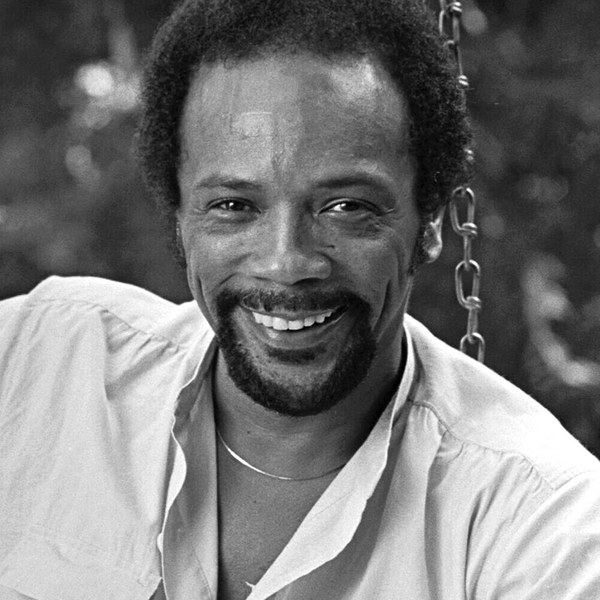
Retrato de Quincy Jones
Quincy Jones, que la produjo. Foto: Los Angeles Times, CC BY 4.0.

Una figurita de campanas, y Michael. Esa es toda la producción.

Sin batería. Sin bajo. Nada sujetando el suelo. La estrofa entera se queda en esa intimidad, y la contención está haciendo un trabajo real, porque te acercas. No hay nada más en la sala que escuchar. Todo disco que quiere terminar grande tiene que decidir cuán pequeño está dispuesto a empezar, y es justo aquí donde la mayoría de las producciones pierden el valor.

Luego un piano eléctrico. Luego bombo y caja. El crecimiento ya está en marcha, y sigue sin haber bajo, que es el detalle que quiero que te lleves. El bajo es la manera más obvia de hacer que algo parezca más grande, así que el arreglo se niega a gastarlo todavía.

El estribillo cambia el suelo, no el volumen

Al salir del pre-estribillo hacia el primer estribillo, el arreglo no se limita a abrir más instrumentos. Cambia lo que estás pisando.

Llega la batería completa y por fin entra el bajo. Y es un bajo de teclado, un bajo de sintetizador, no uno eléctrico. Esa decisión importa más de lo que parece. Un bajo de sintetizador tiene otro peso y otro ataque, no compite con la calidez acústica que tiene encima, y convierte la transición en un cambio de terreno en lugar de en algo añadido por arriba.

Los coros crecen por dentro

Entonces entran las voces de fondo, y esta es la idea más elegante de todo el arreglo.

No llegan como un bloque. Primero doblan la voz principal, al unísono, reforzando lo que ya hay. Solo después se abren en armonía. Así que los coros están construyendo, en miniatura, la misma forma exacta que está construyendo la canción. Una capa que crece mientras se añade.

Y aquí es donde el inmersivo se gana el sueldo. Michael ha estado muy en el centro, canal central incluido. Cuando entran esos coros los abro hacia fuera, para que según se ensancha el arreglo musicalmente se ensanche también el espacio. En Atmos por fin puedes hacer lo que el arreglo llevaba describiendo desde el principio.

El pre-estribillo trepa por la armonía

La segunda estrofa vuelve con otra interpretación vocal y la batería completa detrás, con esa caja grande. Y entonces el segundo pre-estribillo hace algo que me encanta.

No crece subiendo de volumen. Crece escalando armónicamente. Va trepando hacia el estribillo y, justo donde tu oído espera el movimiento al cinco, se queda colgado en la nota blue, por la séptima, y luego va al menor en lugar de a donde prometía el patrón. Sustitución mínima. Momento genuinamente dramático, porque la armonía te acaba de decir que esta vez hay algo distinto.

Ahí está la lección escondida debajo de toda la canción. El crecimiento es una decisión armónica tanto como de arreglo.

El silencio antes del coro

El último estribillo es donde llega el coro gospel, y lo brillante no es el coro. Es lo que pasa justo antes.

Todo se para. Silencio. Después el coro. La recompensa es enorme, y es enorme precisamente porque el arreglo estuvo dispuesto a ceder el suelo un momento antes. No puedes hacer que una entrada se sienta así de grande añadiendo algo. La haces grande quitándolo todo y llenando después el agujero.

En Atmos puse el coro un poco detrás de ti y un poco por encima, para que converse con las voces de fondo en vez de sentárseles encima. Michael delante, los coros a su alrededor, el coro gospel detrás y arriba. Tres capas vocales en tres sitios distintos, hablándose todas, y el conjunto sigue creciendo según avanza la canción.

El mismo acorde mayor antes y después del cambio de tono: Sol y, medio tono más arriba, La bemol antes G medio tono arriba A
El mismo acorde, medio tono más arriba. Después de ocho minutos de crecimiento, ese es todo el truco.

Y luego llega el cambio de tono, medio tono directo hacia La bemol. Después de todo lo que ya ha pasado, ese medio tono se abre como una puerta.

Lo que soltaron las multipistas
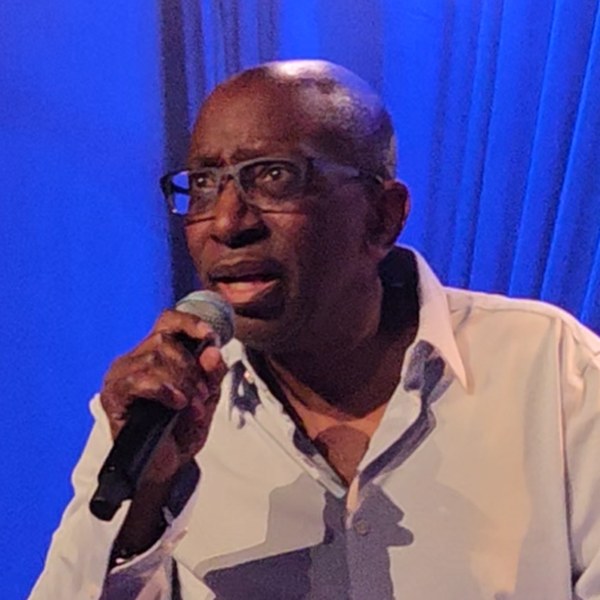
Retrato de Greg Phillinganes
Greg Phillinganes, cuyo piano acústico es lo que apareció. Foto: Joe Sukkos, CC0.

Y ahora lo que encontré haciendo esta mezcla y que no había oído en cuarenta años conociendo esta canción. Greg Phillinganes al piano acústico. Vuelve a aparecer, haciendo algo completamente distinto, en el análisis de I Can't Help It.

Es una parte de piano preciosa, profundamente gospel, y en la mezcla estéreo vive por debajo de todo lo demás. Separa los elementos como te deja hacerlo el inmersivo y aparece delante con una claridad real. Escucha la parte sola una vez, luego escúchala dentro del tema, y ya no vas a poder dejar de oírla. Ese es todo el argumento para hacer este trabajo. No espectáculo. Recuperar información musical que llevaba en la cinta desde el primer día.

¿Y cómo se baja de ahí?

Cuando una canción está arriba, la pregunta difícil es cómo sales.

Aquí la respuesta es un vamp largo. Un acorde, aguantando, mientras todo se asienta emocionalmente. El coro sigue con él. Hay unas líneas de bajo notables moviéndose por debajo. Nadie tiene prisa y nadie la necesita, porque la canción ya ha dicho lo que venía a decir, y el vamp está ahí para que puedas quedarte con ello.

Lo que hay que llevarse

El crecimiento en una canción no es volumen y no es tocar más fuerte.

Es estructura. Es qué metes y, mucho más importante, cuándo. Es saber cuándo sorprender a alguien, cuándo desnudarlo, cuándo parar en seco, y cómo bajar hacia una resolución que se sienta ganada en vez de programada. Cada una de esas decisiones se oye en este disco, y ni una sola es un accidente.

Transcripción completa (en inglés)
  1. 0:00 Hi guys, today I want to talk about this incredible song, "Man in the Mirror".
  2. 0:04 Michael Jackson from the album "Bad".
  3. 0:07 It doesn't get better than that.
  4. 0:09 Quincy Jones together with Michael Jackson in their best time.
  5. 0:12 This song really is a masterclass in arrangement and musical growth.
  6. 0:16 How do we start from something so intimate and then take it all the way to exploding emotionally?
  7. 0:22 So let's take a look inside.
  8. 0:24 The song starts with something as basic as a little bell, right? You remember?
  9. 0:31 And just Michael immediately, right?
  10. 0:34 It's just so the whole verse is just very intimate with Michael, this voice.
  11. 0:38 [song excerpt]
  12. 0:45 [song excerpt]
  13. 0:51 So at the beginning we don't have drums, we don't have any drums,
  14. 0:54 we don't have anything, we just have that one keyboard.
  15. 1:02 Then it's gonna bring a little bit of the groove and the rest of the production,
  16. 1:05 but listen to that, no bass yet.
  17. 1:16 So we're adding this electric piano.
  18. 1:22 And the kick snare, obviously the drums.
  19. 1:37 How it starts to build it.
  20. 1:42 Going up.
  21. 1:47 At this point we're in the pre-chorus, we're gonna hit the chorus and we don't just open instruments,
  22. 1:53 we actually changed a little bit of what the listener is feeling, right?
  23. 1:57 You're gonna see the full drums, the bass comes in, it's a keyboard bass, but it's a beautiful transition.
  24. 2:14 So we introduce the synth bass.
  25. 2:25 And then obviously he starts to bring in background vocals, right?
  26. 2:30 So first they're doubling, then they're harmonizing, listen to that.
  27. 2:44 So right there we see how even the backgrounds come in, they're still building within themselves.
  28. 3:04 First there's unison and then they open into the harmony.
  29. 3:15 At the same time in Atmos, he's been very much in the center, center channel included, right?
  30. 3:22 Then when these backgrounds come in, I'm opening them up a little bit, so now we're expanding,
  31. 3:27 they're doubling but now the spectrum got wider, right, as well.
  32. 3:31 So sonically, in Atmos, now we're able to also open it up as musically it's doing in the arrangement.
  33. 3:38 Second verse, he's already delivering the vocals in a whole different way.
  34. 3:45 And now we have already the full drums with the big snare, so it's on into the next pre-chorus.
  35. 3:58 Now we have to keep building from here.
  36. 4:00 Something I love musically, how it happens, the pre-chorus, it's lifting to the chorus and it's actually harmonically doing a lift.
  37. 4:07 So it's actually scaling up.
  38. 4:15 To the chorus.
  39. 4:42 Did you catch that one? How when it goes to the five things on the blue note, kind of like the seventh, so like...
  40. 4:54 Instead of going to the side, it goes to the minor.
  41. 5:07 Now it's a dramatic moment, right?
  42. 5:09 So we're going to explode into the last chorus with the full production on.
  43. 5:13 The gospel choir is going to come in, but look at the setup.
  44. 5:23 The brilliant thing here is that we're stopping silence and then the big gospel choir comes in, right? Big payoff.
  45. 5:30 In Atmos we have it actually a little bit more behind and a little bit elevated so that it talks to the backgrounds that are here.
  46. 5:36 So we have Michael, we have the backgrounds and we have the gospel choir.
  47. 5:39 So it all talks together and it keeps growing as the song goes.
  48. 5:44 Listen to these guys, this is phenomenal.
  49. 5:54 Then we have the backgrounds.
  50. 6:03 Now the interesting thing is how they work together with the gospel choir.
  51. 6:26 Then we grow to the last chorus, right? Direct key change, we raise a half step to A flat.
  52. 6:51 A very key element that I discovered in Atmos, I mean, with Humberto Gatica when we were mixing this, and it's like Greg Phillinganes on the acoustic piano.
  53. 7:01 It's just going off due to the Atmos nature that now we can separate things and we can hear some elements with a lot more clarity.
  54. 7:09 Look at this brilliant part that Greg Phillinganes is playing here.
  55. 7:13 Very gospel piano.
  56. 7:21 Listen to that again now in the context of the track.
  57. 7:44 That's the whole game.
  58. 7:51 Now this goes on and it's just, you don't want to get out of there.
  59. 8:06 So how do you get out of there, right? That's another brilliant part of the arrangement.
  60. 8:10 After we finished everything, there's this long vamp out.
  61. 8:15 It's just in one chord where we're just like emotionally kind of settling. Listen to this.
  62. 8:21 [song excerpt]
  63. 8:33 We have the choir with him.
  64. 8:36 [song excerpt]
  65. 8:46 There's some incredible bass lines actually. Greg, I believe, played as well this beautiful. Look at this.
  66. 9:10 Beautiful song, beautiful message, which is obviously...
  67. 9:23 One of my favorites actually and one of the most fun when we were doing all the Dolby Atmos mixes.
  68. 9:28 Every song, I mean, you discover a lot of things in every song and a lot of musical jewels on this process, but it's so much fun.
  69. 9:35 I think the lesson for this is that growth in the song musically is not just volume and it's not just playing more aggressive.
  70. 9:43 It's just how you structure things, how you bring in new elements.
  71. 9:46 When do you bring them? When do you do something to surprise the listener and then all of a sudden we explode?
  72. 9:52 How do you put all those elements together on top of each other?
  73. 9:55 How do you break it down? How do you come down to that resolution?
  74. 9:59 See you in the next episode. Leave me in the comments what other song you would be very curious about from Michael Jackson's discography.
  75. 10:06 I'm going to be opening up some of these musical jewels. So I'll see you in the next one. Remember to like and subscribe.