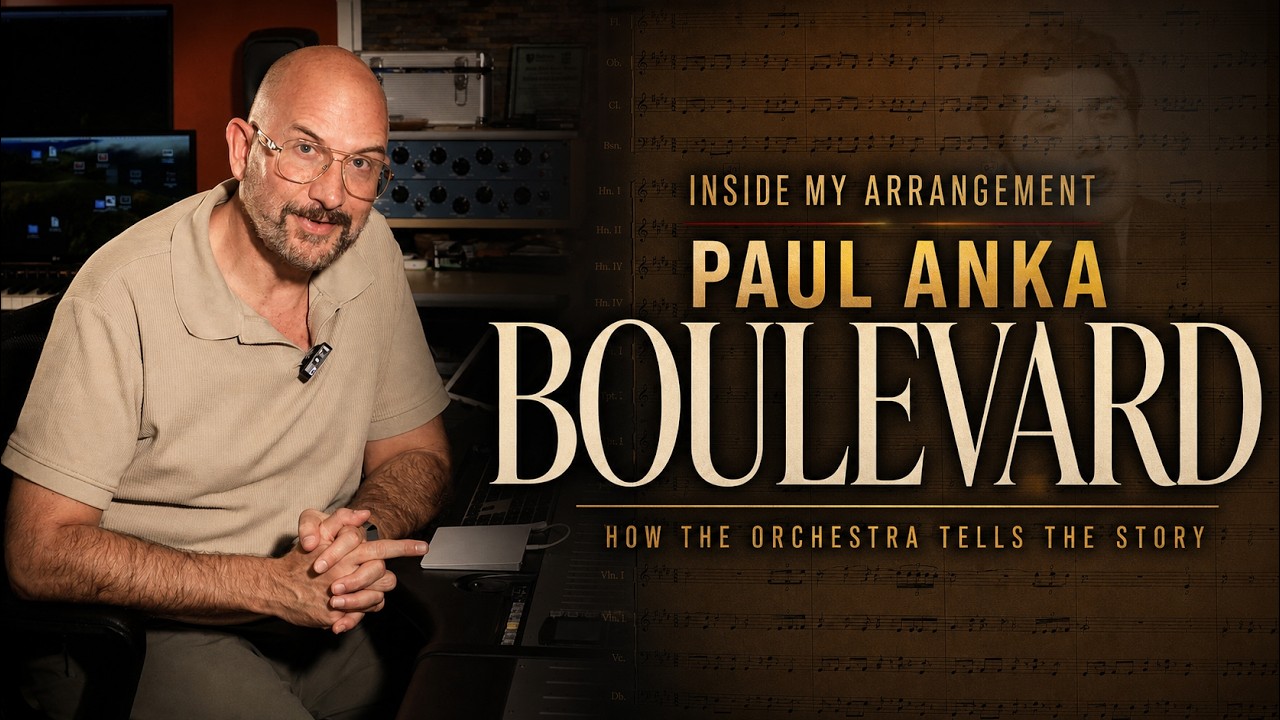
Inside the Song

Dentro de "Boulevard" de Paul Anka: la orquesta detrás de la soledad

Casi todo lo que te enseño en esta serie es la cinta de otro. Esta es mía. "Boulevard" es una canción que arreglé y orquesté para Paul Anka, y quiero llevarte dentro: el arreglo, la orquesta, qué están haciendo las cuerdas, por qué hay un órgano ahí.

Cada una de esas decisiones sale de algo que no es música. Esta canción va de soledad. Vas caminando por un bulevar que era nuestra calle, y ahora lo caminas solo. Así que la pregunta que había que contestar no era nunca cómo hacer el disco grande. Era cómo construir sobre esa soledad.

Conoces a Paul Anka aunque creas que no
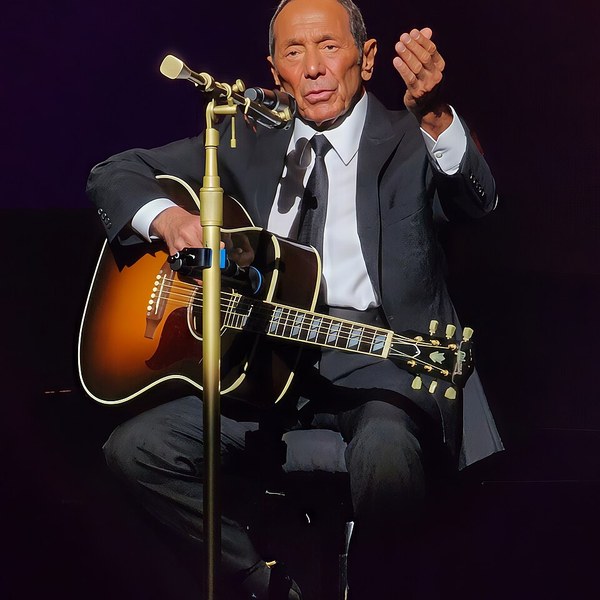
Paul Anka en el escenario en 2024
Paul Anka en el escenario en 2024. Foto: Crisco 1492, CC BY 4.0.

Lleva en esto desde adolescente. Su primer éxito fue "Diana", y tenía dieciséis años cuando la escribió. Después "Put Your Head on My Shoulder". Después "You Are My Destiny". Hay una cantidad asombrosa de canciones por ahí escritas por Paul Anka que te sabes de memoria sin saber que son suyas.

La que regaló
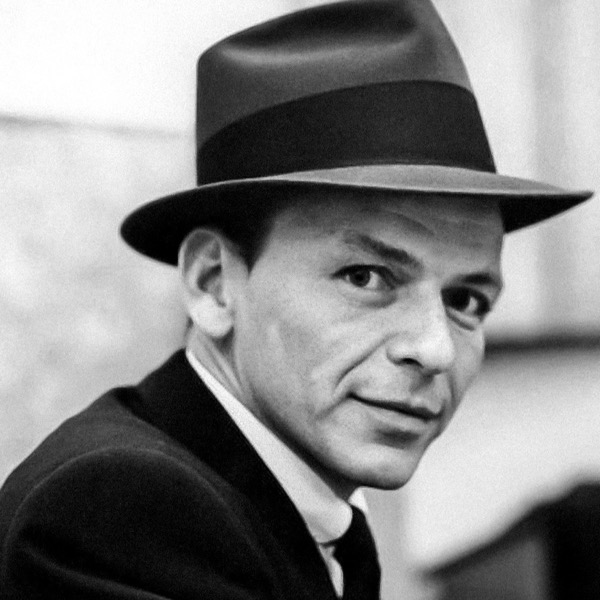
Retrato de estudio de Frank Sinatra con sombrero, 1957
Frank Sinatra en 1957, doce años antes de "My Way". Foto: Capitol Records, dominio público.

El caso más claro es "My Way". Paul escuchó el original en Francia, una canción que se llama "Comme d'habitude", y pensó que le venía como un guante a Frank Sinatra. Frank estaba a punto de retirarse. Ya había tenido bastante, tocaba despedirse, y Paul le escribió la letra en inglés justo para eso. Se convirtió en un éxito tan enorme que Frank no se retiró nunca.

Luego están las canciones con Michael, "This Is It" y "Love Never Felt So Good", del mismo catálogo en el que yo pasaría meses metido años después, remezclándolo en Dolby Atmos. Seis décadas de estilos cambiando alrededor de una cosa que no cambia: el hombre te cuenta una historia. En esta canción, esa historia es todo el trabajo del arreglo.

Una voz íntima y una orquesta en Budapest

"Boulevard" salió en febrero de 2026, en Inspirations of Life and Love. Paul cantó todas las voces en su propio estudio. Mi amigo Jorge Vivo produjo el disco, grabó esas voces y lo mezcló él mismo, y es quien me llamó para escribir los arreglos, igual que trabajamos en "I Believe".

Lo que me encanta del disco es ese contraste. Un hombre cantando estas letras en la intimidad de su casa, y esa intimidad llevada hasta el otro extremo, hasta una orquesta entera, la Budapest Scoring Orchestra. Esas dos cosas pueden pelearse con facilidad. El arreglo existe para que no se peleen.

Nostalgia, pero con acento europeo

Paul me mandó la maqueta con piano y un poco de guitarra rasgueada encima, lo justo para enseñarme la melodía y la armonía de la estrofa. Ya sonaba nostálgica. Lo que yo sentí que le faltaba era un tipo concreto de nostalgia: europea, del viejo continente. Un bulevar, no una calle.

Se presenta a todos antes de que cante nadie

Cuando Paul entra, todos los personajes de esta historia están ya en escena. El piano. El bajo, que lo mantiene todo asentado y junto. Las cuerdas, diciéndote desde la introducción que esto va a ser épico, antes de que tengas ninguna prueba de que lo será.

Y el órgano, que es el personaje que nadie espera en una canción así. Ese tono nostálgico debajo de una introducción hace algo que un colchón de cuerdas no puede hacer, y va a tener su papel más adelante. Lo pongo en los primeros compases para que, cuando vuelva, lo reconozcas en vez de darte cuenta de él.

Dale un gancho a tu personaje

Quería que esta canción tuviera una identidad que se pueda señalar con el dedo, así que escribí un gancho en el piano y lo traigo desde el principio de todo. Más tarde la orquesta te devuelve esa misma figura, y más tarde aún reaparece en el turnaround.

Nadie analiza eso mientras escucha. Solo sienten que ya han estado aquí antes. Y sentir que ya has estado aquí antes es todo el asunto emocional de una canción sobre una calle que caminabas con alguien.

Los mismos acordes, otro punto de vista

La primera vez que pasa la estrofa expongo la armonía básica y nada más. La segunda uso inversiones, para que el bajo baje caminando por debajo de los mismos acordes. Misma armonía, otro punto de vista. Sobre el papel no has cambiado nada. En la sala lo has cambiado todo.

El estribillo se va al quinto grado menor

Aquí está el momento que más me gusta de esta canción. Estamos en Mi bemol mayor, y el estribillo tendría que levantar hacia el quinto grado, Si bemol mayor. No lo hace. Se va a Si bemol menor.

Eso lo hace una sola nota: la tercera del acorde, bajada medio tono. Un quinto grado mayor abre una puerta. Un quinto grado menor la abre a una calle vacía, que es justo donde está este personaje.

Dos pentagramas en Mi bemol mayor: el primer grado seguido del quinto grado mayor, y el mismo primer grado seguido del quinto grado menor, con la tercera bajada a Re bemol 1 · el quinto grado mayor E B 2 · el quinto grado menor E B m ♭3
El estribillo debería levantar al quinto grado mayor. Baja su tercera medio tono y el mismo acorde se vuelve nostálgico en vez de triunfal.

Y por encima meto las trompas, haciendo un contracanto contra Paul. Las trompas tienen algo de realeza. Ensanchan la magnitud de la historia sin que nadie tenga que gritar.

Segunda estrofa: quita el piano

En una segunda estrofa siempre quiero un elemento nuevo, y la manera de conseguirlo no siempre es añadir. El piano lleva contando esta historia desde el primer compás, así que aquí hago lo contrario: lo quito, y le doy la estrofa a la guitarra.

Y luego, en vez de dejar tanto acorde abierto detrás de él, me voy a un momento melódico: un contracanto hecho de intervalos grandes. Los intervalos grandes cuentan una historia por sí solos. La emoción se estira como un elástico y vuelve.

Cuerdas que no paran de hablar

Esto es lo que aprendí de los grandes y sigo aprendiendo. Cuando las cuerdas se abren para sostener los voicings completos de la armonía, no pueden quedarse ahí aguantándolos. Necesito movimiento entre ellas todo el rato, para que haya siempre un diálogo: los violines dicen algo, los violonchelos contestan.

Y entonces la última estrofa se rompe

Para la última estrofa lo desmonto todo y subo una octava. Tiene que sentirse frágil. Es de noche, estás solo, la otra persona no está.

Es la misma idea armónica de la primera estrofa, con una sustitución. Donde el oído espera el Do menor, yo pongo un La bemol invertido, con el Do todavía debajo: el sexto grado bemol. Se mueve una sola voz, el Sol sube a La bemol, y el acorde deja de ser menor sin que el bajo se entere.

Un acorde de Do menor y, a su lado, un La bemol con el mismo Do en el bajo: solo se mueve el Sol, que sube a La bemol 1 · lo que espera el oído C m 2 · lo que suena A / C ♭6
El Do menor que espera el oído, y el La bemol que lo sustituye sobre la misma nota del bajo. Se mueve una voz y el color cambia entero.

Eso es muy nostálgico, y además sale casi gratis. Que es todo el argumento de la armonía sobre la que escribo: la pregunta interesante casi nunca es cuántos acordes te sabes, sino qué nota tienes permiso para mover.

Trae al personaje de vuelta, y luego suéltalo

En ese turnaround, sobre el acorde suspendido, nuestro personaje vuelve una vez más. El mismo gancho, para que sepas dónde estás.

Y de ahí al final las cuerdas vuelven para cerrar la canción, pero no repito el motivo otra vez. A esas alturas está más que expuesto. En su lugar el violonchelo se lleva la última línea él solo, y eso es lo que te acompaña a la salida.

Lo que yo te diría

Decide de qué va la canción antes de escribir una nota. Todo lo que viene después es solo serle fiel.

Dale un personaje a la historia y déjalo volver. Cambia el punto de vista en vez de cambiar los acordes. Mantén las voces interiores hablándose, porque una partitura que solo se hincha es una partitura que ha dejado de escuchar. Y cuando quieras una emoción nueva, busca primero la única nota que puede moverse, no los diez instrumentos que podrías añadir.

Voy a seguir enseñándote canciones en las que he participado. Pero muchos me estáis pidiendo que entre en discos con los que no tuve nada que ver, y meterse dentro de esos clásicos suena divertidísimo, así que seguid mandando sugerencias. Las leo todas.

Transcripción completa (en inglés)
  1. 0:00 Hi, Carlos Rodgarman here and today I want to show you inside Paul Anka's song where I had the privilege of doing arrangements and orchestration.
  2. 0:09 And I want to show you a little bit inside the arrangement the orchestra what the strings are doing etc.
  3. 0:15 This is a song that is really about loneliness.
  4. 0:18 It's walking on the Boulevard that used to be you know used to be our street now you're not with me I'm alone so it's all this solitude and how do we reflect
  5. 0:28 That in the song? How do we build on that solitude?
  6. 0:32 How do we have that nostalgic feel?
  7. 0:35 How do we support that story line?
  8. 0:36 But before I get into that if you don't quite know who Paul Anka is I'm sure you do even if you think you don't.
  9. 0:44 And Paul Anka started since his teens.
  10. 0:47 I believe his first hit was the song and I think he was like 16 years old when when he wrote and and came up with that with that single.
  11. 0:58 And there's an incredible amount of songs that you know that were written by Paul Anka even if you didn't know.
  12. 1:04 I mean we just mentioned Diana.
  13. 1:07 I mean how about put your head on my shoulder?
  14. 1:18 How about You Are My Destiny?
  15. 1:28 How about My Way? My Way he's he's told the story several times but I think My Way is a song that he wrote for Frank Sinatra when Frank was about to retire.
  16. 1:51 He wanted to retire I've had enough and it's time to say goodbye so to speak.
  17. 1:56 And uh he heard this song in France and he thought it was a perfect fit for for Frank.
  18. 2:02 So, he wrote the English lyrics to to the song My Way and it just became such a huge hit for Frank that he never retired.
  19. 2:09 And then how about in This Is It?
  20. 2:12 His collaborations with Michael Jackson were I mean songs like This Is It or song like Love Never Felt So Good.
  21. 2:29 This legacy of songs and and compositions and then incredible career that he's had led all the way to this last album that that he released in which I'm a a part of.
  22. 2:39 And the styles changed through the years, but what doesn't change is his storytelling.
  23. 2:44 And and that's part of the magic, especially in this song.
  24. 2:46 The song was released in February of this year, 2026, and it's part of the album Inspirations of Love and Life.
  25. 2:53 He did all his vocals in his studio.
  26. 2:56 Uh my friend Jorge Vivo, who produced the album and he actually called me to be a part of this project, uh recorded all the vocals and he mixed the the album himself.
  27. 3:04 It's a very interesting contrast between that intimacy of him singing these lyrics in his house and taking it all the way to doing the orchestration with uh Budapest Scoring Orchestra
  28. 3:15 That we used in this First of all, this is a song that to me it just sounded obviously very nostalgic, but that nostalgia needed to have a kind of a European touch.
  29. 3:36 He presented the demo to me with just piano and a little uh a little bit guitar strumming on top just to kind of show me the melody.
  30. 3:46 Uh the harmony of the verse, I'll I'll show you the I'll show you the progression on the verse, but I felt like it needed to be a little bit uh a little bit
  31. 3:55 Yes, European kind of sounding.
  32. 3:57 So, with the piano I'll I'll show you the intro.
  33. 4:18 Took a lonely walk Immediately all the characters that I chose are there.
  34. 4:22 First of all, the piano, obviously, the bass keeping it all grounded and all together.
  35. 4:27 But, then the nostalgic tone of the organ I felt like it was a great I'll show you just already in the intro coming in there.
  36. 4:47 It's going to play a role later in the song.
  37. 4:50 But, that together with the with the strings with the orchestra we're already from the intro letting you know that this is going to be an epic I'll show you the orchestra.
  38. 5:16 First of all, I wanted to introduce an identity to this character.
  39. 5:19 So, I have this hook that I do on the piano.
  40. 5:24 I bring that hook from the very beginning.
  41. 5:44 The way I do the verse I'm just going to expose the first time around we expose the basic harmony.
  42. 5:49 Now, I decided to do a little bit inversion so that I have a descending bassline.
  43. 5:54 So, same chords, different point of view.
  44. 6:26 I'll show you how I'm doing it on the That's another hook that I do on the on the orchestra.
  45. 6:52 You just heard it, but it comes from the piano, this figure right So, those are moments that are identifiers, so to speak, of the arrangement.
  46. 7:06 And I'm going to play with what elements do it or not do it in different parts of the song.
  47. 7:11 Now, when we go to the chorus, I love this.
  48. 7:26 I always love when you're in in in in a key and we go to the fifth in the minor state.
  49. 7:32 So, it's such a nostalgic sound.
  50. 7:35 It's instead of 1 5 major, right?
  51. 7:42 We do the minor. Here in the chorus, I'm trying to expand the magnitude of the story, uh and I'm bringing another kind of royal, so to speak, sound, which is the French horns,
  52. 8:25 Right here, and they start to do a counter melody to him.
  53. 8:58 Second verse, I always like to do some kind of new element sonically or either adding or removing.
  54. 9:04 In this case, the piano has been telling the story the whole time.
  55. 9:07 So, now I'm actually doing the opposite.
  56. 9:09 I'm going to drop the piano, and I'm going to give it to the guitar, and just tell the second verse with Paul.
  57. 9:15 Listen to that. With a heavy heart.
  58. 9:37 I thought it was nice to go into a melodic moment with them instead of having so much of the chord open.
  59. 9:44 Just go to this counter melody.
  60. 10:05 I love those type of intervals when you have all these big intervals, they really tell a story when you're doing this.
  61. 10:12 It's almost like the emotions are the elastic emotions of it, right?
  62. 10:16 In the context of the song.
  63. 10:21 We used to walk and talk on the boulevard.
  64. 10:28 You and I and friends, we used to see what I could hear.
  65. 10:36 Now, one thing I always love to do, which I learned from the greats and I keep learning all the time, it's like when you're Now we're opening the strings to support the full
  66. 10:45 Voicings of the harmony, but I just need some movement in between them all the time.
  67. 10:50 So, there's always a dialogue between the strings.
  68. 10:53 Listen to the I'll solo the strings how they're moving.
  69. 11:14 Then on the last verse, I wanted to break it down a little bit different.
  70. 11:19 I'm going to the higher uh octave, right?
  71. 11:23 So, to make it fragile, it's night.
  72. 11:25 I'm alone, you're not here with me, right?
  73. 11:28 So, we're breaking down to this.
  74. 11:29 It's the same idea the same harmonic idea of the first verse, but now we're breaking it down So, see what I'm doing there to add to that nostalgia instead of just doing the
  75. 11:49 To the C minor, right?
  76. 11:51 To the B, A. So, what I'm doing, I'm actually doing an inversion where I'm playing with the flat six.
  77. 11:58 So, instead of the C, I'm doing an A flat inverted, right?
  78. 12:06 That's very nostalgic. One more time the whole last verse, outro of the song.
  79. 12:44 See on that turnaround that to the sus, I'm introducing again our character.
  80. 13:00 Little after dark on the boulevard another lonely night I can't break free.
  81. 13:15 So, at this point to the very end of the song, we're going to bring the strings again to close it, but we don't need to repeat one more time the ta-da-da-da-da.
  82. 13:24 That motif has been more than exposed.
  83. 13:27 So, I just come back with the cello line.
  84. 13:48 We close it. I'll be sharing some other songs in which I've been involved, uh but you guys are asking me to analyze some songs that actually I love and that I've not been
  85. 14:09 A part of, but I'm considering actually analyzing some of these because it's really fun to get inside of some of these classics and see some of the details that are hiding in the
  86. 14:17 Production or in the sound or in the arrangements, the harmonies, etc.
  87. 14:21 So, keep suggesting songs cuz I read you and I'll try to answer as much as I can and uh I'm shooting as much as I can, obviously.
  88. 14:30 I have a limited amount of time because we're busy, we're in in a lot of production, but I'm going to keep the content coming.
  89. 14:37 So, keep suggesting songs. Thank you for watching and don't forget to like and subscribe.
  90. 14:44 See you in the next one.