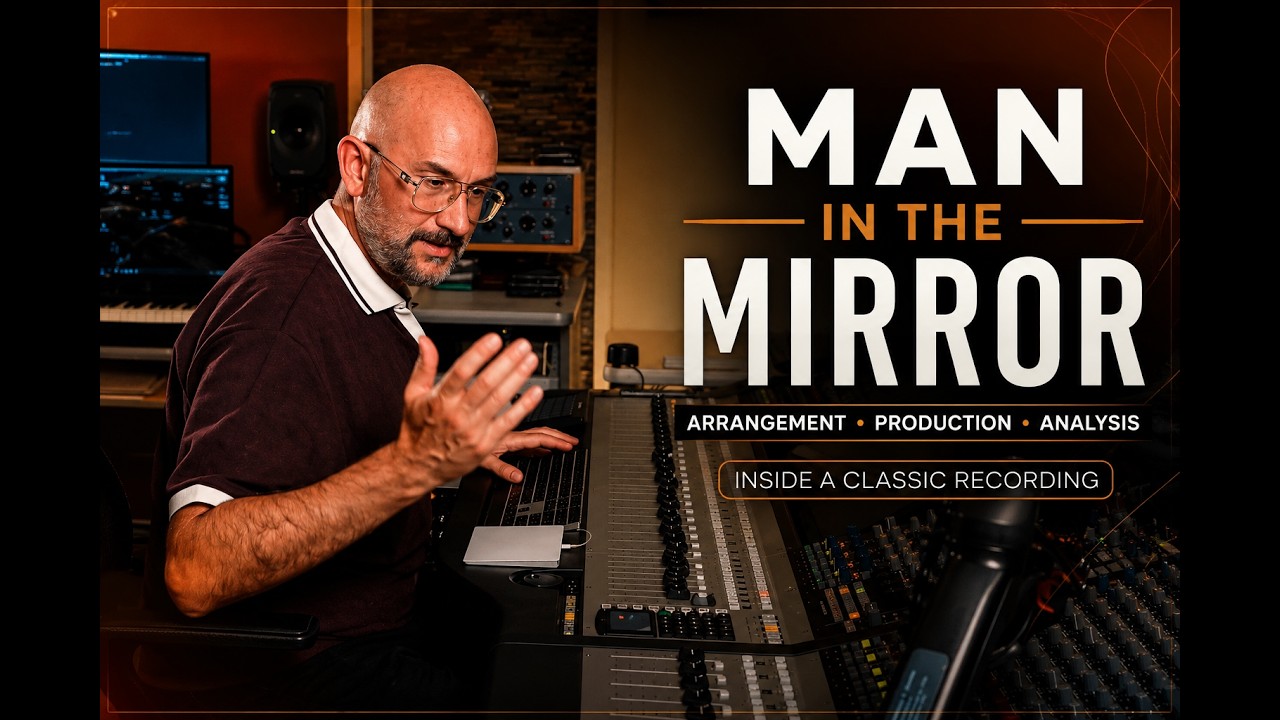
Inside the Song

Inside "Man in the Mirror": How the Arrangement Keeps Growing

Today I want to talk about "Man in the Mirror", from Bad. Quincy Jones and Michael Jackson at their best. It doesn't get better than that.

Mixing this catalogue in Dolby Atmos with Humberto Gatica meant opening these multitracks and hearing every element on its own. Some records survive that. A few get better, because you find things that were always in there and stereo never had the room to show you. This is one of those.

And it's a masterclass in one very specific thing: how a song grows. It starts about as small as a record can start, it ends with a gospel choir, and it gets there without a single moment where you feel somebody reached for a fader.

It starts with almost nothing
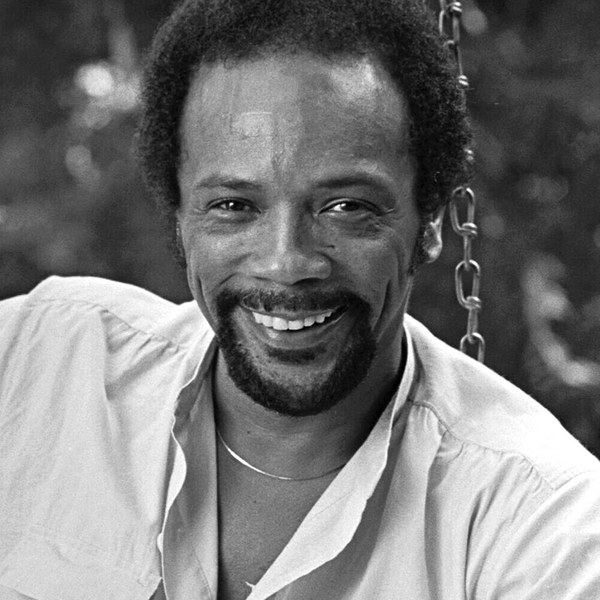
Portrait of Quincy Jones
Quincy Jones, who produced it. Photo: Los Angeles Times, CC BY 4.0.

A small bell figure, and Michael. That's the whole production.

No drums. No bass. Nothing holding the floor up. The entire first verse stays that intimate, and the restraint is doing real work, because you lean in. There's nothing else in the room to listen to. Every record that wants to finish big has to decide how small it's willing to start, and this is exactly where most productions lose their nerve.

Then an electric piano. Then kick and snare. The build is under way, and there's still no bass, which is the detail I want you to steal. Bass is the most obvious way to make something feel bigger, so the arrangement refuses to spend it yet.

The chorus changes the ground, not the volume

Coming out of the pre-chorus into the first chorus, the arrangement doesn't simply open more instruments. It changes what you're standing on.

Full drums arrive, and the bass finally comes in. And it's a keyboard bass, a synth bass, not an electric one. That choice matters more than it looks. A synth bass has a different weight and a different attack, it doesn't compete with the acoustic warmth above it, and it turns the transition into a shift in ground rather than something added on top.

The backgrounds grow inside themselves

Then the background vocals come in, and this is the most elegant idea in the whole arrangement.

They don't arrive as a block. First they double the lead, in unison, reinforcing what's already there. Only afterwards do they open into harmony. So the backgrounds are building, in miniature, the exact shape the song is building. A layer that grows while it's being added.

This is also where immersive earns its keep. Michael has been very much in the centre, centre channel included. When those backgrounds come in I open them outward, so that as the arrangement widens musically the space widens with it. In Atmos you can finally do what the arrangement was describing all along.

The pre-chorus climbs harmonically

The second verse comes back with a different vocal performance and full drums behind it, that big snare. And then the second pre-chorus does something I love.

It doesn't build by getting louder. It builds by scaling up harmonically. It's climbing into the chorus, and right where your ear expects the move to the five, it hangs on the blue note, around the seventh, and then goes to the minor instead of where the pattern promised. Tiny substitution. Genuinely dramatic moment, because the harmony has just told you something is different this time.

That's the lesson hiding underneath the whole song. Growth is a harmonic decision as much as an arrangement one.

The silence before the choir

The last chorus is where the gospel choir arrives, and the brilliant part isn't the choir. It's what happens right before it.

Everything stops. Silence. Then the choir. The payoff is enormous, and it's enormous precisely because the arrangement was willing to give up the floor for a moment first. You can't make an entrance feel that big by adding to something. You make it big by removing everything and then filling the hole.

In Atmos I put the choir slightly behind you and slightly above, so it's in conversation with the backgrounds instead of sitting on top of them. Michael in front, the backgrounds around him, the choir behind and above. Three vocal layers in three distinct places, all talking to each other, and the whole thing still growing as the song goes.

The same major chord before and after the key change: G and, a half step higher, A flat before G a half step up A
The same chord, a half step higher. After eight minutes of build, that is the whole trick.

Then comes the key change, straight up a half step into A flat. After everything that has already happened, that half step opens like a door.

What the multitracks gave up
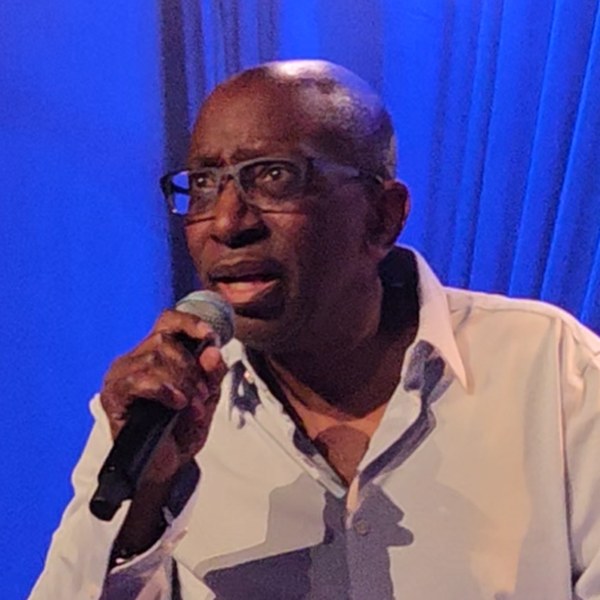
Portrait of Greg Phillinganes
Greg Phillinganes, whose acoustic piano is the thing that came back. Photo: Joe Sukkos, CC0.

Here's the thing I found doing this mix that I had never heard in forty years of knowing this song. Greg Phillinganes on acoustic piano. He turns up again, doing something completely different, in the I Can't Help It breakdown.

It's a beautiful, deeply gospel piano part, and in the stereo mix it lives underneath everything else. Separate the elements the way immersive lets you and it comes forward with real clarity. Listen to the part on its own once, then listen to it inside the track, and you won't be able to un-hear it. That's the whole argument for doing this work. Not spectacle. Recovering musical information that was on the tape the entire time.

How do you come down?

Once a song is up there, the hard question is how you get out.

The answer here is a long vamp. One chord, holding, while everything settles emotionally. The choir is still with him. There are some remarkable bass lines moving underneath it. Nobody is in a hurry and nobody needs to be, because the song has already said what it came to say, and the vamp is there so you can sit with it.

What to take from it

Growth in a song isn't volume and it's not playing harder.

It's structure. It's what you bring in and, much more importantly, when. It's knowing when to surprise somebody, when to strip it back, when to stop dead, and how to come down to a resolution that feels earned instead of scheduled. Every one of those decisions is audible in this record, and not one of them is an accident.

Full transcript
  1. 0:00 Hi guys, today I want to talk about this incredible song, "Man in the Mirror".
  2. 0:04 Michael Jackson from the album "Bad".
  3. 0:07 It doesn't get better than that.
  4. 0:09 Quincy Jones together with Michael Jackson in their best time.
  5. 0:12 This song really is a masterclass in arrangement and musical growth.
  6. 0:16 How do we start from something so intimate and then take it all the way to exploding emotionally?
  7. 0:22 So let's take a look inside.
  8. 0:24 The song starts with something as basic as a little bell, right? You remember?
  9. 0:31 And just Michael immediately, right?
  10. 0:34 It's just so the whole verse is just very intimate with Michael, this voice.
  11. 0:38 [song excerpt]
  12. 0:45 [song excerpt]
  13. 0:51 So at the beginning we don't have drums, we don't have any drums,
  14. 0:54 we don't have anything, we just have that one keyboard.
  15. 1:02 Then it's gonna bring a little bit of the groove and the rest of the production,
  16. 1:05 but listen to that, no bass yet.
  17. 1:16 So we're adding this electric piano.
  18. 1:22 And the kick snare, obviously the drums.
  19. 1:37 How it starts to build it.
  20. 1:42 Going up.
  21. 1:47 At this point we're in the pre-chorus, we're gonna hit the chorus and we don't just open instruments,
  22. 1:53 we actually changed a little bit of what the listener is feeling, right?
  23. 1:57 You're gonna see the full drums, the bass comes in, it's a keyboard bass, but it's a beautiful transition.
  24. 2:14 So we introduce the synth bass.
  25. 2:25 And then obviously he starts to bring in background vocals, right?
  26. 2:30 So first they're doubling, then they're harmonizing, listen to that.
  27. 2:44 So right there we see how even the backgrounds come in, they're still building within themselves.
  28. 3:04 First there's unison and then they open into the harmony.
  29. 3:15 At the same time in Atmos, he's been very much in the center, center channel included, right?
  30. 3:22 Then when these backgrounds come in, I'm opening them up a little bit, so now we're expanding,
  31. 3:27 they're doubling but now the spectrum got wider, right, as well.
  32. 3:31 So sonically, in Atmos, now we're able to also open it up as musically it's doing in the arrangement.
  33. 3:38 Second verse, he's already delivering the vocals in a whole different way.
  34. 3:45 And now we have already the full drums with the big snare, so it's on into the next pre-chorus.
  35. 3:58 Now we have to keep building from here.
  36. 4:00 Something I love musically, how it happens, the pre-chorus, it's lifting to the chorus and it's actually harmonically doing a lift.
  37. 4:07 So it's actually scaling up.
  38. 4:15 To the chorus.
  39. 4:42 Did you catch that one? How when it goes to the five things on the blue note, kind of like the seventh, so like...
  40. 4:54 Instead of going to the side, it goes to the minor.
  41. 5:07 Now it's a dramatic moment, right?
  42. 5:09 So we're going to explode into the last chorus with the full production on.
  43. 5:13 The gospel choir is going to come in, but look at the setup.
  44. 5:23 The brilliant thing here is that we're stopping silence and then the big gospel choir comes in, right? Big payoff.
  45. 5:30 In Atmos we have it actually a little bit more behind and a little bit elevated so that it talks to the backgrounds that are here.
  46. 5:36 So we have Michael, we have the backgrounds and we have the gospel choir.
  47. 5:39 So it all talks together and it keeps growing as the song goes.
  48. 5:44 Listen to these guys, this is phenomenal.
  49. 5:54 Then we have the backgrounds.
  50. 6:03 Now the interesting thing is how they work together with the gospel choir.
  51. 6:26 Then we grow to the last chorus, right? Direct key change, we raise a half step to A flat.
  52. 6:51 A very key element that I discovered in Atmos, I mean, with Humberto Gatica when we were mixing this, and it's like Greg Phillinganes on the acoustic piano.
  53. 7:01 It's just going off due to the Atmos nature that now we can separate things and we can hear some elements with a lot more clarity.
  54. 7:09 Look at this brilliant part that Greg Phillinganes is playing here.
  55. 7:13 Very gospel piano.
  56. 7:21 Listen to that again now in the context of the track.
  57. 7:44 That's the whole game.
  58. 7:51 Now this goes on and it's just, you don't want to get out of there.
  59. 8:06 So how do you get out of there, right? That's another brilliant part of the arrangement.
  60. 8:10 After we finished everything, there's this long vamp out.
  61. 8:15 It's just in one chord where we're just like emotionally kind of settling. Listen to this.
  62. 8:21 [song excerpt]
  63. 8:33 We have the choir with him.
  64. 8:36 [song excerpt]
  65. 8:46 There's some incredible bass lines actually. Greg, I believe, played as well this beautiful. Look at this.
  66. 9:10 Beautiful song, beautiful message, which is obviously...
  67. 9:23 One of my favorites actually and one of the most fun when we were doing all the Dolby Atmos mixes.
  68. 9:28 Every song, I mean, you discover a lot of things in every song and a lot of musical jewels on this process, but it's so much fun.
  69. 9:35 I think the lesson for this is that growth in the song musically is not just volume and it's not just playing more aggressive.
  70. 9:43 It's just how you structure things, how you bring in new elements.
  71. 9:46 When do you bring them? When do you do something to surprise the listener and then all of a sudden we explode?
  72. 9:52 How do you put all those elements together on top of each other?
  73. 9:55 How do you break it down? How do you come down to that resolution?
  74. 9:59 See you in the next episode. Leave me in the comments what other song you would be very curious about from Michael Jackson's discography.
  75. 10:06 I'm going to be opening up some of these musical jewels. So I'll see you in the next one. Remember to like and subscribe.