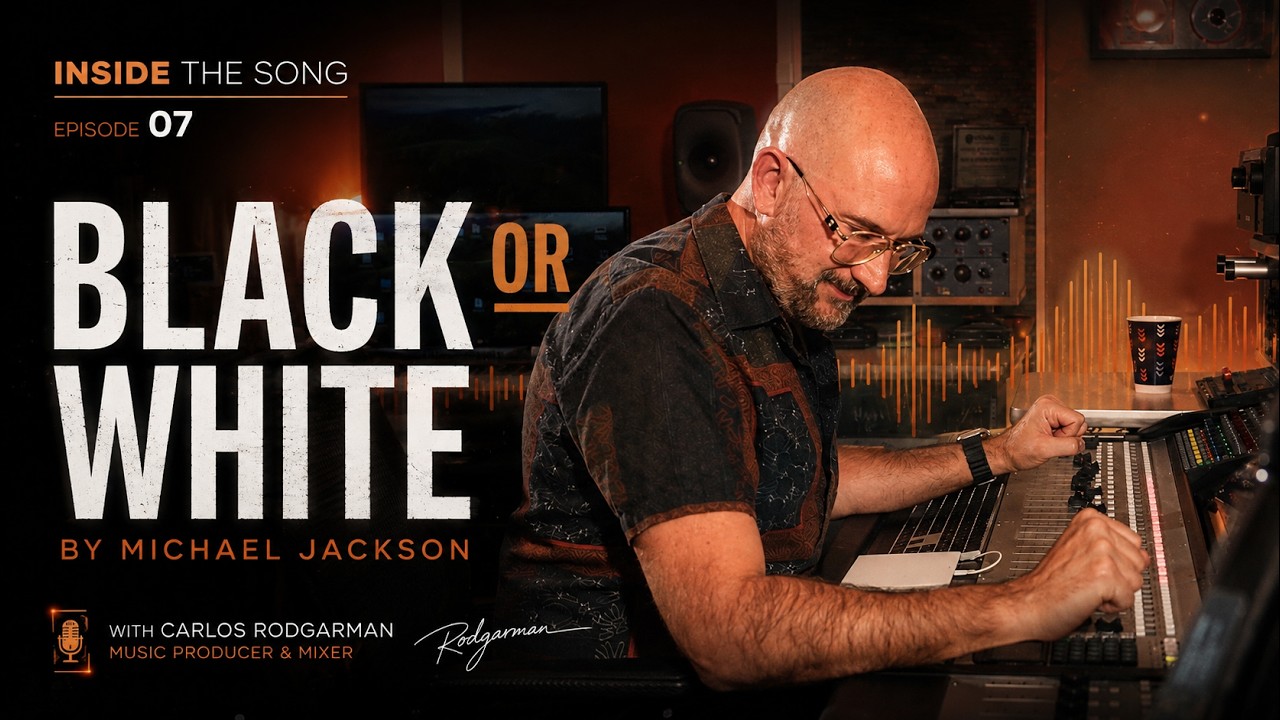
Inside the Song

Inside "Black or White": Why It Sounds So Powerful

Who doesn't remember this riff?

"Black or White", the first single from Dangerous, spent seven weeks at number one on the Hot 100, and it has always been one of my favorite songs. I had the privilege of mixing it in Dolby Atmos with Humberto Gatica when we rebuilt the whole catalog, the same sessions the Earth Song breakdown comes from.

This is a record about unity: one consistent groove, one consistent thought, pulling everybody the same way. And the production says it even louder than the lyric does.

The video that morphed us into one

Portrait of John Landis
John Landis, who directed the video, as he had directed Thriller. Photo: Pietro Luca Cassarino, CC BY-SA 4.0.

I still remember the video. It was one of the first times we saw morphing on our screens: one face flowing into the next, no cut. The technology had exploded a few months earlier in Terminator 2, and that same year Michael put it in a music video directed by John Landis, the same director he had made Thriller with.

The message couldn't be simpler: black or white, enough with the racism, we're all the same. And the video shows how one consistent groove can unify all of us. The faces keep changing. The groove doesn't.

An intro that lives in two rooms
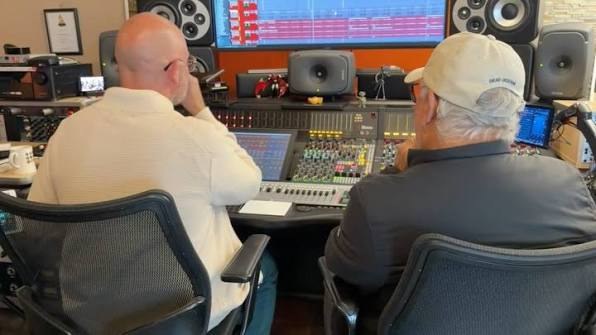
Carlos Rodgarman and Humberto Gatica in the studio
With Humberto Gatica, mixing the Michael Jackson catalogue in Dolby Atmos.

This intro was so much fun to do in Atmos. Remember it: the kid blasting the record in his room, and dad coming to the door.

In stereo that scene is a skit. In Atmos it's a floor plan. We put the kid listening to the music in the back of the room, and the dad knocking in the front, "Dad, it's too loud, bring it down", so the argument actually happens across the room, around you.

Every one of those channels is an object, which is what Atmos calls a sound you can place and move anywhere in the room. The main track sits in the middle, creating unity; the dad lives in the front; the kid answers from the back, "Dad, this is the best part", and you know exactly where each of them is standing.

The riff is the space around it

The first thing I want to talk about is obviously the main riff, and the secret of the main riff is how tight it is. It's the space, actually: how empty, and how powerful, it is. That emptiness is what creates room for the groove.

And it isn't alone. Behind it there's a layer of harmonics, very low, very subtle, singing a low harmony under the guitar. You've heard this record a thousand times and probably never noticed it. Solo it, and it's been there all along.

Did you realize it's a blues?

For a song called "Black or White", what harmonic cycle could be more unifying and more universal than the blues?

It's a twelve-bar blues in E, the perfect key for the guitars and for the riff. I'll try to play it on piano, which is obviously not what the guitar does, but you'll get it: when Michael comes in, the verse walks the twelve bars exactly as tradition wrote them.

Two staves in E major: the plain tonic triad the key asks for, and the blues tonic, the same chord with the flat seventh added, D natural 1 · what the key asks for E 2 · the blues tonic E 7 ♭7
The plain tonic triad of E major, and the blues tonic the song actually runs on: the same chord with the flat seventh, D natural, on top.

That's the blues paradox in a single chord: in E major nobody asked for a D natural, and the blues plants it right on the tonic. That flat seventh is what makes a pop riff sound older and bigger than pop.

The groove is built on space

Now, how the groove is put together, piece by piece. First: did you ever catch that signature sound, that little frog on the snare?

Then the synth bass. Enormous when it speaks, and then it steps aside. It gives so much space. That's the whole philosophy of this production: everything hits, and everything gets out of the way.

Michael sits very dry, right in your face, and there's just one small keyboard sneaking into the cycle, and only on the five. Count the elements: there are almost none. That's why it sounds this big. It's the same lesson as the Don't Stop 'Til You Get Enough breakdown: the groove is made of what you leave out.

The acoustic guitar nobody talks about

For the second verse an acoustic guitar comes in, and it gives the record so much more power. The riff is already going; this one locks on top of it. Tight. Super tight.

And do we ever get tired of watching Michael's groove? His breathing, his everything. The way he rides this structure is an instrument in itself.

Breaking the structure

The song is a consistent structure that keeps repeating, and that's the point: one groove for everybody. So how does he break it? With that crazy sequencer, which in Atmos is really fun, spinning the section around the room. And for the bridge that goes around before the rap, we head to the minor. An interesting change: the first time the record leaves home.

Then the rap. Underneath it there's a very funky guitar doing a very funky riff, playing with the sixth of the chord.

An E major chord and the same chord with the added sixth, C sharp, the note the funky guitar plays with during the rap 1 · the chord E 2 · with the sixth E 6 6
The E chord of the riff, and the same chord once the funky guitar adds the sixth, C sharp.

And can we talk about that transition into the rap? All the craziness gathers itself up and hands off, and the rap lands as an ear break: after the density that came before, suddenly it's guitar, percussion and a voice. Listen to the guitar there. It's so funky.

An ending among friends

After the rap we're back to the blues structure. We go to the four, there's the turnaround, and the song settles into the jam-out.

And then, a very interesting ending for its time: everything falls away and it finishes almost acoustic, like you were all friends playing together in a room, and you just end the song.

What to take from it

Michael was ahead of his time in so many songs, and a lot of what he was telling us, humanity keeps repeating. The message of this record hasn't expired.

The production lesson hasn't either: power isn't stacking, it's space. A riff that leaves room, a bass that speaks and then steps aside, and the most universal harmonic cycle there is, hiding in plain sight under one of the biggest pop records ever made.

We need to listen again. And make that change.

Full transcript
  1. 0:00 Hi, Carlos Rodgarman here. And I just want to ask you, who doesn't remember this?
  2. 0:09 Right, iconic. This is another legendary song that I got the privilege of mixing in Dolby Atmos with Humberto Gatica when we rebuilt all the catalog into Dolby Atmos.
  3. 0:20 This was the first single of the album Dangerous. It was 7 weeks number one in the US Hot 100.
  4. 0:26 And this has always been one of my favorite songs. I still remember the video.
  5. 0:31 Remember that video where it was one of the first times actually that we were seeing this morphing technology in video? I believe it started with the movie Terminator 2, if I'm correct. I don't know. You guys can tell me if I'm wrong on that.
  6. 0:45 But then Michael used it in this video and it just showed this whole message: black or white, enough with the racism, we're all the same.
  7. 0:52 And it actually shows through the video how just one consistent groove, one consistent thought can unify all of us.
  8. 0:59 First of all, it was so much fun to do in Atmos this intro. Remember the intro with the kid listening to the music?
  9. 1:11 So, in Atmos what we did is we're putting the kid listening to the music in the back, and then the dad is coming knocking: "Dad, it's too loud. Bring it down." So, dad is in the front.
  10. 1:22 So, there's this dialogue in Atmos.
  11. 1:29 You can see we have here this track, right, that is in the middle creating unity in the room.
  12. 1:37 This is in the front where the dad is going to be, and this one is in the back where the kid is listening to the music.
  13. 1:48 "Dad, this is the best part."
  14. 1:57 You can see how the panning, we're moving the object, which is what all these channels are called in Dolby Atmos.
  15. 2:04 The first thing that I want to talk about is obviously the main riff. The secret of this is how tight it is.
  16. 2:11 It's the space actually. It's how empty, powerful, and empty it is, so that creates space for the groove, right? Listen to the guitar riff.
  17. 2:25 Which has a layer actually of these harmonics behind. Very low, very subtle.
  18. 2:34 You see how it's doing that low harmony? I'll bring it up so you can hear it.
  19. 2:45 For Black or White, what harmonic cycle more unifying and universal than the blues. Did you realize it's a blues?
  20. 2:52 It's in E. Right? Because it's the perfect key for the guitars and for the riff, right?
  21. 2:59 So, the main riff is going to be something like — I mean, I'm going to try to do it on piano, which is not the same. Obviously, I can't do what the guitar does, but you'll get this.
  22. 3:15 So, the interesting thing when he comes in: it starts the blues progression, as we know, the 12-bar progression.
  23. 3:48 The next element is actually to show you how the groove is built.
  24. 3:58 Did you catch that signature sound, that little frog on the snare?
  25. 4:11 Then the synth bass, it's also so powerful when it speaks, but then it gives so much space.
  26. 4:24 So, it's all about the space. Listen to that in the context of the full riff of the full song.
  27. 4:43 And we have Michael very dry in your face. We just have that small keyboard that comes in on the cycle, in the blues cycle.
  28. 5:02 It comes on the five.
  29. 5:15 Now, for the second round, second verse, there's this acoustic guitar that comes in and it gives so much more power.
  30. 5:21 We already have the riff going, but listen to this one that comes in. Tight. Super tight.
  31. 5:31 So, listen to that when the second verse comes in.
  32. 5:45 Do we ever get tired of seeing Michael's groove? Just his breathing, his everything.
  33. 5:54 "But if you're thinking about my baby, it don't matter if you're black or white."
  34. 6:04 So, this is just a consistent structure that keeps repeating, right? Then, how does he break it?
  35. 6:11 Well, with this crazy sequencer that in Atmos is actually really fun.
  36. 6:25 For that crazy bridge that goes around before the rap, we're going to the minor. Which is an interesting change.
  37. 6:34 During the rap, there's a very funky guitar doing a very funky riff playing with the sixth of the chord.
  38. 6:53 Now, can we talk about that moment, that transition? Look what we're doing in Atmos. What a great transition into the rap.
  39. 7:06 "Protection for gangs, clubs, and nations, causing grief in human relations. It's a turf war on a global scale."
  40. 7:13 This gives us a nice ear break, right? From the craziness before we go into the next section. Listen to the guitar. It's so funky.
  41. 7:25 With the percussion, look at that.
  42. 7:38 In the context of the whole rap section.
  43. 7:48 And we're back to the blues structure. We go to the four.
  44. 8:01 So, now it's a turnaround and then we're going to stay on basically the jam out, right?
  45. 8:18 And then he has a very interesting ending for the time. Look at that. Just very acoustic, like you were all friends playing together, and we just end the song.
  46. 8:34 So many Michael songs where he was so ahead of his time, really. And a lot of the stuff that he was telling us, humanity still keeps repeating.
  47. 8:43 So, we need to listen again. Make that change.
  48. 8:48 Stay tuned for more song breakdowns and I'll keep reading as many comments as I can, and I'll try to do as many breakdowns as possible.
  49. 8:56 So, thanks for watching. Don't forget to like, share, and subscribe. See you soon.