
Dolby Atmos Bed vs Object: What's the Difference and When to Use Each
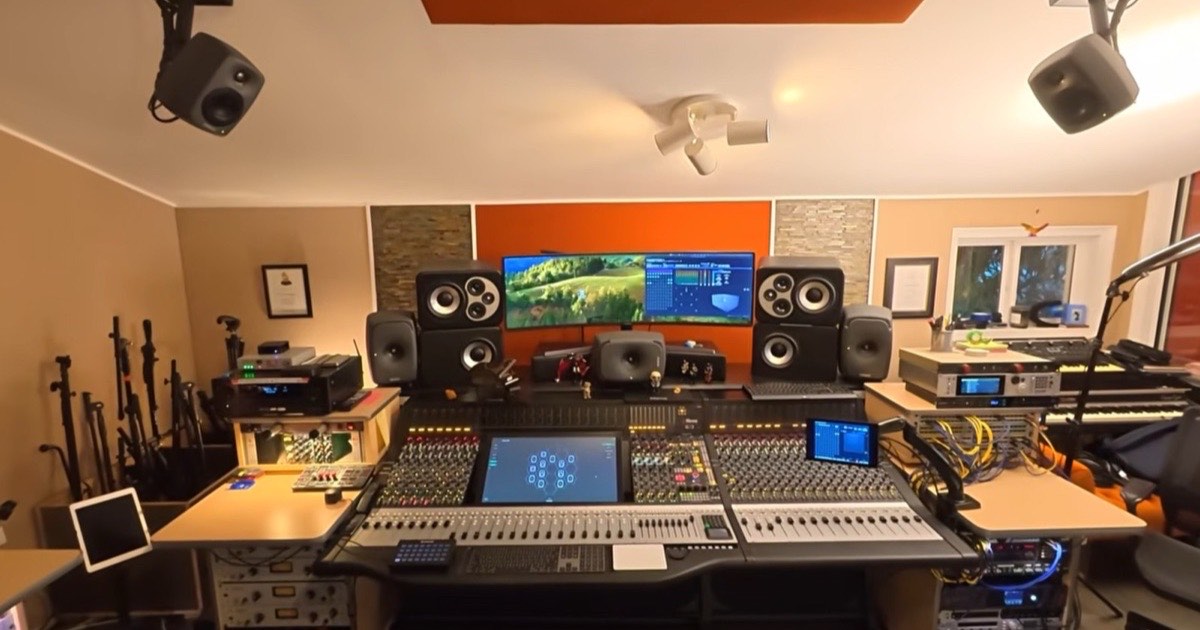
Every Dolby Atmos mix is built from two kinds of tracks: beds and objects. A bed is a channel-based layer, like a classic surround mix. An object is a sound with a position in three-dimensional space, and the playback system decides which speakers reproduce it. I mixed the Michael Jackson catalog in Dolby Atmos with Humberto Gatica at RG Studio, my room in Los Angeles, and the choice between beds and objects shaped those mixes more than any plug-in. This is the difference, explained from the mixing chair.
Dolby Atmos bed vs object: the short answer
- Bed: the signal is panned across fixed channels (L, R, C, Ls, Rs, LFE and so on), like a conventional surround bus. The widest bed is 7.1.2.
- Object: the signal goes to the renderer as mono or stereo, and its position travels next to it as metadata. It is not tied to any speaker.
- On playback: the renderer builds the mix for whatever the listener has, from headphones to a soundbar or a full room with speakers in the ceiling.
What is a bed in Dolby Atmos?
A bed works like the surround mixes we made before Atmos. Each bed track is routed to a multichannel bus and panned across its channels, and each channel corresponds to a speaker. According to Apple's Logic Pro documentation, the maximum width of a bed is 7.1.2: seven channels at ear level, the LFE and a single pair of overhead channels. That means a bed cannot place a sound at the front or at the back of the ceiling. In the Dolby Atmos master file, the bed takes up to 10 channels.
The bed is also the way into the LFE, the low-frequency effects channel: the same documentation states that an object track cannot be routed directly to it.
What is an object in Dolby Atmos?
An object is a mono or stereo signal that goes straight to the Dolby Atmos renderer, without a surround panner. Its position, static or automated, is stored as separate metadata. In Logic Pro the Dolby Atmos plug-in accepts up to 118 objects, and a stereo object counts as two. When you export the master, every object and its pan information stay separate inside the ADM BWF file, the format Apple Music and other services ask for. If you are delivering a project, my guide to Dolby Atmos stems covers what to send.
That is why Atmos is called an object-based format: the mix is not locked to one speaker layout. The playback device renders it for the speakers it has. If a system has no overhead speakers, whatever was placed in the height channels is folded down to the closest surround channels.
Why I build my bed out of objects
The standard approach is to work on a 7.1.2 bed and send only the moving elements as objects. I don't work that way. For the Michael Jackson albums I built a 9.1.6 bed made entirely of objects. Whatever stays still for most of the song goes into that bed of objects; whatever needs specific control goes as an independent object, and those are the ones I move or automate in position.
I have two reasons. The first is scalability: objects render natively on any system, from AirPods to a 9.1.6 room, so the same decisions translate to headphones, to a 5.1 receiver without height and to a room with speakers in the ceiling. The second is the headphone render: as objects, every element can get its own near, mid or far distance setting, which I explain in my guide to Dolby Atmos binaural render mode.
I keep the standard bed for very little: the returns of specific effects, like a global reverb or a particular delay.
Beds and objects in a real mix: “Black or White”
The intro of “Black or White”, from Dangerous, shows the difference better than any diagram. A kid is blasting music in his room and his dad comes to the door. In stereo that scene is a skit. In Atmos we turned it into a floor plan: the kid at the back of the room, the dad knocking at the front, and the main track in the middle, holding everything together. Each of those elements is an object, so you know exactly where each of them is standing.
Moving the kid literally to the rear speakers could sound aggressive and throw off the entrance of the guitar, so I duplicated the original stereo at 40% in the sides, as a layer of glue that holds the whole space together. The transition becomes cinematic without losing the familiarity of the original mix. Later in the song, the sequencer that breaks the structure spins around the room. I break the whole record down in Inside “Black or White”.
Objects also let you point the listener's ear without touching a fader. In “Don't Stop 'Til You Get Enough” there is a little clap figure with the background vocals that I take to the back and bring back. Just by changing its position, you notice something that was on the record all along.
When to use a bed and when to use an object
- Bed: anything that has to reach the LFE, and effect returns that should wrap the whole room, like a global reverb or delay. Many engineers also put every static element there; that is the standard approach.
- Object: anything that moves, anything you want to place precisely (including the front or the back of the ceiling, which a 7.1.2 bed cannot reach) and anything that needs its own binaural distance.
- Keep the foundation in front: whichever you choose, the groove, the kick and the snare normally stay on the front wall. I don't want to hear my snare coming from behind, unless that is exactly the idea.
- Plan the count: a stereo object uses two of the 118, so decide early what really needs to be an object.
Whatever the balance, check how it translates. My room has a Genelec 7.1.4 system calibrated with GLM, and I still check every mix on headphones in binaural, in the car and on a living room soundbar.
Frequently asked questions
What is the difference between a bed and an object in Dolby Atmos?
A bed is channel-based: its signal is panned across fixed speaker channels, up to 7.1.2. An object is a mono or stereo signal with its position stored as metadata, and the playback system decides which speakers reproduce it.
What is the maximum bed size in Dolby Atmos?
7.1.2, according to Apple's Logic Pro documentation: seven ear-level channels, the LFE and one pair of overhead channels. In the master file the bed takes up to 10 channels.
How many objects can a Dolby Atmos mix have?
In Logic Pro, up to 118 objects, plus up to 10 channels of the 7.1.2 bed in the ADM BWF master. A stereo object counts as two.
Can an object be sent to the LFE?
No. An object track cannot be routed directly to the LFE channel; low-frequency effects go through the bed.
Can you mix Dolby Atmos without a bed?
Almost. For the Michael Jackson albums I built a 9.1.6 bed made entirely of objects and kept the standard bed only for the returns of specific effects, like a global reverb or a particular delay.
To hear the result, start with my guide to Michael Jackson in Dolby Atmos on a pair of headphones. And if you have a project of your own, this is how I work at RG Studio.