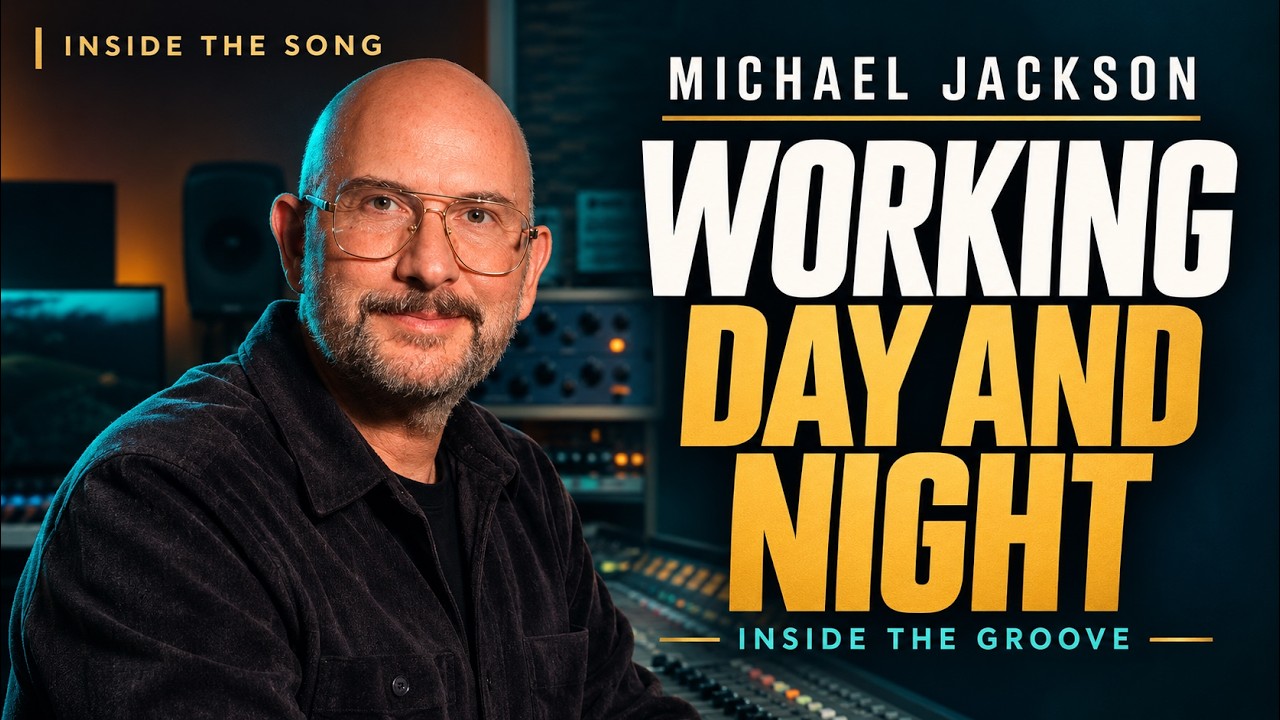
Inside the Song

Inside "Working Day and Night": How the Groove Works

Another masterpiece from Off the Wall, and what a jam.

Doing a little research for this one, I found out that Off the Wall came out on August 10, 1979. That happens to be my birthday, so now it's even more my favorite album. "Working Day and Night" was written by Michael himself and produced by Quincy Jones. It was never a single. It ended up as the B-side of "Rock with You", and it's one of the fastest songs he ever recorded.

Humberto Gatica and I had the privilege of remixing all these albums in Dolby Atmos: Off the Wall, Bad, Dangerous, HIStory, all the way to Invincible. This song is all about rhythm, the same lesson as the Don't Stop 'Til You Get Enough breakdown from the same record. Let me show you how the groove is built, piece by piece.

A one-four jam

The harmony is very basic. It's a jam, a one-four, and there are only a couple of little moments where it changes to give it a shift. Everything else is the groove and the repetition of the parts.

Two staves in B minor: the B minor chord, the one, and the E minor chord, the four; B is the note they share, and it never moves 1 · the one B m 2 · the four E m
The two chords the jam turns on: B minor, the one, and E minor, the four. They share the B, so the loop never really leaves home.

Two chords, B minor and E minor, and the note they share, B, doesn't move. That's why it can go on forever without getting tired: there's no destination, only motion. If you want to understand why so little harmony can carry so much, this song is the perfect example.

The piano holds that one-four, and a Rhodes doubles it. Both are credited to Greg Phillinganes, who you'll also find in the Man in the Mirror breakdown.

A train that doesn't stop
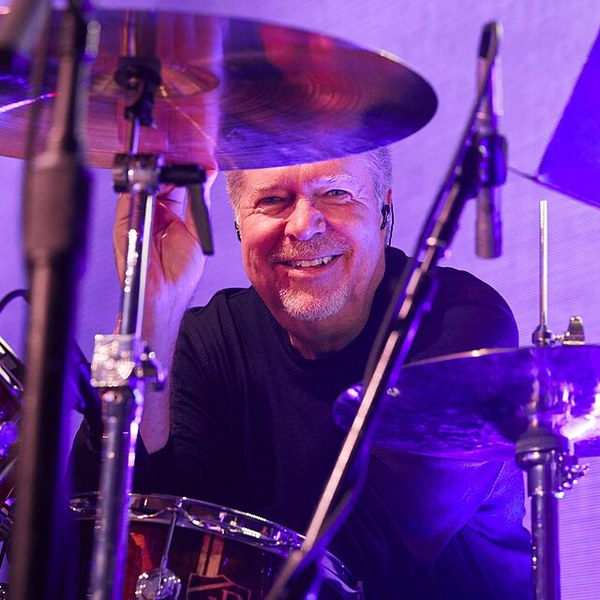
Portrait of JR Robinson at the drums
JR Robinson, the king of groove, who also plays on I Can't Help It. Photo: Suzanne Teresa, CC BY-SA 4.0.

How do all these elements work together as one groove? They're all brilliantly placed in the right spot, and it's all about finding the pattern that works. That repetition puts you in a groovy trance, so to speak.

The drums barely move: a little something here and there, and that's it. And on top of the snare there's Michael's clap. Solo it and you can hear how much it adds. You can even hear his foot.

JR Robinson, the king of groove. He doesn't even do a fill in this whole thing. There are no crashes on the downbeats, no toms. It's just consistent yumminess, I don't know how else to put it. Go to the end of the verse into the chorus and watch the drums stay exactly where they were. It's a train that doesn't stop, and that's what's brilliant about J.R. on this whole album. That's the foundation.

Bottles, shaker and space
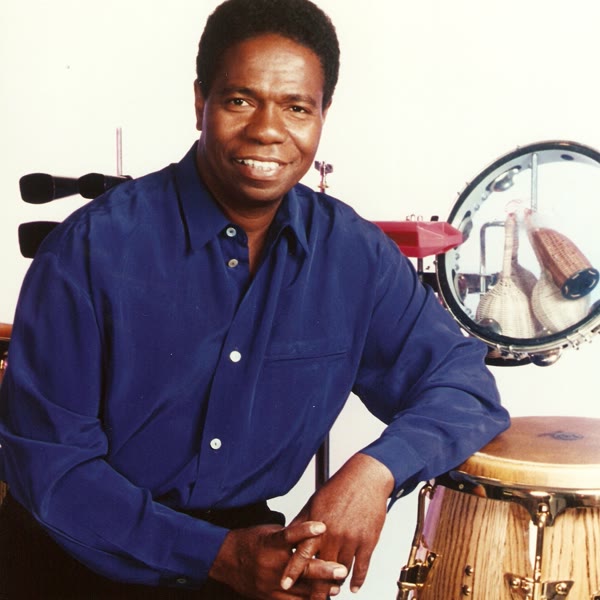
Portrait of Paulinho da Costa with his percussion instruments
Paulinho da Costa, credited on percussion with J.R. and Michael. Photo: ALR, CC BY-SA 3.0.

What creates all the syncopation, all the movement? A couple of elements. One is the very famous bottles, which work together with a shaker on the other side. The percussion on the record is credited to Paulinho da Costa, J.R. and Michael himself.

In Atmos we have, as usual, the foundation in the front wall: the drums, with a little of the center speaker for kick, snare, some of the vocal and the bass, depending on how much you want to bring them in. The percussion, because it's creating all that syncopation, we opened a little and elevated a little. That creates a nice space. Why? Because there's another element of the groove that lives on the shoulder sides: the guitars. Not exactly at shoulder length, a little bit open.

And there's another guitar part that answers the main groove, the one you'll recognize. In Atmos we placed it on the shoulders too, so the two of them talk to each other.

Michael is the groove
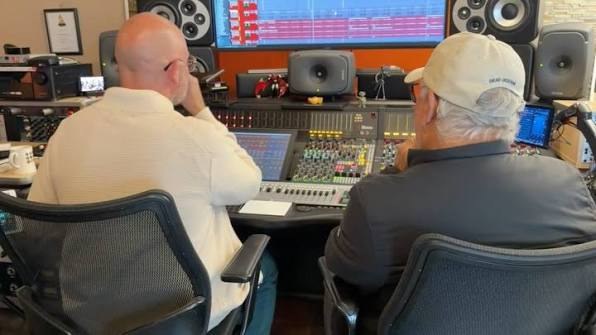
Carlos Rodgarman and Humberto Gatica in the studio
With Humberto Gatica, remixing the Michael Jackson catalogue in Dolby Atmos.

We know Michael integrates all these rhythms with his breath, the noises of his body, his stepping. But check out the intro. We already know it starts with the bottles and the shaker, but it's really all based on him: on one track he's doing the whole groove with his voice, and then he goes on a second track.

We all know this about Michael, but hearing it like this is something else. In the Atmos world, Humberto and I always keep his lead vocal in the center when he's singing, and we open the backgrounds a little, so there's that space again.

I love this: there's a moment where he starts singing the guitar part right when the guitar needs to come in. He's calling it in.

We also did a fun thing with the backgrounds, the "ooh" and the "ah": they move around you. On YouTube you're listening to a stereo binaural reduction of the Atmos mix, so there's only so much it can represent. I'm starting to encode the next episodes in immersive, so you'll be able to appreciate the Atmos a little better, depending on your setup.

His lead on the verse is doubled, and he doesn't stop. Then comes the pre-chorus, one of those moments where the harmony changes to break things up. Look at the backgrounds there: until now we've had no vocal harmonies, and that's exactly where they open into harmony.

Jerry Hey's horns
Portrait of Jerry Hey
Jerry Hey, who arranged the horns, as he did on Don't Stop 'Til You Get Enough. Photo: Kamasami Kong, CC0.

Obviously we have to talk about the horns of Jerry Hey, played by the Seawind horns. What a brilliant section, and how tight they recorded it. And how brilliantly Michael answers them and then goes with them.

After the second chorus we go to the bridge, and there's something quite amazing there. There's the main horn section, the part you'll remember, and I love hearing the bari sax in it. But underneath there's a second layer. Humberto and I were listening and I said, "Is this in the stereo mix?" It is, if you pay close attention.

In Atmos everything is more apparent because we separate them: the main horns are wide, and the second layer we closed a little, so there's a dynamic between the two. Listen to what the second one is doing. So tight. What were these guys having for breakfast?

And Michael isn't just waiting for the horns to pass and then coming back. Look at him. Then come the hits: the piano with the horns, and a crash going with them. That guitar part, which has its own double, so tight. And did you hear that synth? Another fun thing Humberto and I did: we threw it to the back.

The timbale solo and the fade

Michael's scream, and then the band gives way to the horns one more time. And did you remember that timbale solo? We placed it a little in the back and a little on top, so it's talking to the rest of the guys.

Then the fade out. Listen to Michael on it. So much fun. And we've got to give credit to the piano.

What to take from it

This is all about repetition. Every single part is so freaking hooky: whichever one you pick, it just stays in your brain. And they all work together to become one thing, a machine that keeps you going and going and going.

Listen again and follow a different instrument each time: the bottles, the clap, the answering guitar, the second layer of horns. Every time, you'll hear a different song.

Full transcript
  1. 0:00 Hi, Carlos Rodgarman here, and welcome to another episode of Inside the Song. Another masterpiece, part of the Off the Wall album.
  2. 0:19 As you probably know by now, Humberto Gatica and myself have had the privilege of remixing in Dolby Atmos all these albums of Michael Jackson.
  3. 0:28 We've done Off the Wall, Bad, Dangerous, HIStory all the way to Invincible. Go check it out. You can stream this in any platform that supports immersive audio like Amazon, Tidal, Apple Music, etc.
  4. 0:42 But speaking about the album Off the Wall, this song what a jam. Doing a little research for this, I actually found out Off the Wall arrived August 10, 1979, which makes me so happy because that happens to be my birthday.
  5. 0:57 So now it's even more of my favorite album. This song is all about rhythm and as you guys already know, but let me just play you a little bit of the groove. Basically, it's This is a very basic It's like a jam.
  6. 1:08 It's like a one-four, right? And the And the harmony is very basic and there's only a couple of little moments where that changes to give it a little shift, but it's all about the groove and the repetition of the parts.
  7. 1:19 Let me play you this groove when it comes in here. Okay, let me actually mute Michael's vocal real quick so you can you can see all the groove.
  8. 1:48 Now, how does all these work together as one groove? There's so many elements and they're all brilliantly placed in the right spot. Let me show you the basis Again, this is all about finding that pattern that works and just that repetition puts you in this groovy trance, so to speak.
  9. 2:06 So, we have the It has some fills here and there, but basically that's it for the drums.
  10. 2:21 Look at this. We have also a Michael's clap that adds up to the snare sound.
  11. 2:40 Look at how much his clap is adding. Let me solo the clap. You can hear his foot. With the drums.
  12. 2:58 JR Robinson, the king of groove. He doesn't even do a fill in this whole thing. There's no crashes on the downbeats. There's no toms. It's just consistent yumminess.
  13. 3:09 I don't know how else to put it. You'll see what I mean.
  14. 3:20 Let's say that we go to the end of the verse into the chorus, which should be somewhere around You see how the drums stay?
  15. 3:40 It's just about this train that doesn't stop. That's what's brilliant about J.R. in this in this whole album. That's the foundation. What it's creating all this syncopation, all this movement, there's a couple elements.
  16. 3:52 One is the very famous bottles that we have. I'll play you the bottles That works together with a shaker on the other side.
  17. 4:19 Now, in Atmos we have as usual the foundation the drums. It's in the front wall. We have a little bit of the center speaker for kick snare, some of the vocal bass.
  18. 4:30 The main elements that depending on how much you want to bring them in. Now, this percussion because it's creating all this syncopation, we actually open it a little bit and then elevated it a little bit.
  19. 4:40 So, it creates this nice space. Why? Because there's another element that comes as a part of the groove that is going to be on shoulder sides, which is the guitars. I'll show you the guitars real quick.
  20. 4:52 Which is again another part that it's brilliant and it's just staying We can see the guitars.
  21. 5:05 We have them You see, they're not exactly at shoulder length, but a little bit open. Now, let me show you that together with the percussions that I just showed you.
  22. 5:17 Bottles, shaker. Now, let me show you that inside the track.
  23. 5:30 Let me mute the rest of the stuff for now. Right, with the track.
  24. 5:53 Now, there's another part of a guitar that actually answers to that main groove, which you'll recognize So, that was on this side a little bit as well.
  25. 6:05 In Atmos, we we placed it a little bit on shoulders, so together. Let me show you that in context.
  26. 6:32 So, now next we need to establish this is like I said, a one-four jam. So, the piano is holding it with this is together this piano. And we have a Rhodes doubling it.
  27. 7:03 In context. Now, we need to talk about Michael Uh we know that he's integrating all these rhythms with his breath, his noises in his body, his stepping, all that, but check out this intro.
  28. 7:22 Do you remember this intro? Listen to what's happening here.
  29. 7:40 We have on one side we have the right, we already know that we're starting with the bottles and the shaker. But, it's really all based on him.
  30. 7:50 Listen to this. So, we have on one side So, he's doing the whole groove by Uh but then he's going on a second track.
  31. 8:19 Look at what he's doing. We all know this about Michael, but hearing it like this.
  32. 8:42 So, let me play you both parts together. Now, again, uh Humberto and I, what we did is on and on the Atmos world, we keep his lead vocal always in the center when he's singing, but the backgrounds we open them a little bit, right?
  33. 8:53 So, that we have that again, that space. But let me play you this part. I mean, I love this.
  34. 9:13 There's a moment that he actually gives the He starts to sing the part for the guitar when he needs to come in. Listen. So, let me play you that within the track.
  35. 9:35 So, you see now when the guitar comes in how he's singing that See what I mean?
  36. 9:54 There's no crash in the Now, we did a little fun thing here with those backgrounds. We have this movement Ooh.
  37. 10:06 Ah. I know YouTube uh is usually you guys are listening in stereo and this is all stereo binaural reduction of the Atmos world.
  38. 10:16 So, there's so much that you can represent, but I'm actually starting to work on next episodes being encoded in the immersive so that from YouTube, you guys will be able to appreciate the Atmos a little bit better depending on your setup.
  39. 10:30 Now, let's listen to Michael's lead on that verse, which is doubled. You see what I mean?
  40. 10:43 He doesn't stop. Oh, I don't have to sing? So, this is basically the groove and the foundation of this whole track.
  41. 11:02 Look at when we go to the to the pre-chorus, the which is the only time that we're changing the harmony to break it up, right? Let me show you where that is. So, when that harmony change comes, look at the backgrounds how we're opening to harmonies cuz so far we've had no vocal harmonies.
  42. 11:38 Let me play that with his lead. With everything.
  43. 12:04 Obviously, we have to talk about Jerry Hey Look at this brilliant section. How tight they would record this. So,
  44. 12:34 How brilliant he answers and then goes with him with Michael. Listen. Brilliant.
  45. 12:52 We're back to the groove. The train keeps going. What happens after the second chorus? We go to the bridge. You'll remember this. So, there's something quite amazing here.
  46. 13:12 We have the main horn section, so to speak, which is the part that we'll remember. I love hearing the bari sax.
  47. 13:28 Uh but then underneath there's this. Which Humberto and I were listening and I was like, "Is this in the stereo mix?" It is in the stereo mix if you pay close attention.
  48. 13:38 In Atmos obviously uh everything is more apparent because we separate the horns and then the second layer that I'm about to show you, the horns are wide. Uh and then the second layer we close them a little bit so that there's this this dynamic between them.
  49. 13:52 But look at what the second is doing. So tight.
  50. 14:06 Listen to both of them What were these guys having for breakfast?
  51. 14:27 I don't know. So, let me show you all that now in context. Of course, Michael is not just like waiting for the horns to to pass and then come back.
  52. 14:51 Look at him. And then we have these beautiful hits.
  53. 15:09 So, the hits, as you can see, we have obviously the piano with the horns, which I'll play. But then we have this crash going with I'll show you.
  54. 15:26 Listen. You see? And then obviously that guitar part, can we talk about that?
  55. 15:39 Oh my god, listen to Which has this double.
  56. 16:00 So tight. Listen to both of them. In the context.
  57. 16:24 Did you hear that synth? Another fun thing Humberto and I did on this, we're actually throwing it to the back.
  58. 16:47 Again, look at Michael during this horn Again, this is all about the repetition, all the parts that are so so freaking hooky.
  59. 17:03 Every single part that you pick, it just stays in your brain. So, how all of them work together to become this one thing, this machine that just keeps you going and going and going.
  60. 17:24 I love that scream. There's that, and then there's this. Look at that, to give way to the horns one more time.
  61. 17:46 Did you remember that timbal solo? So, this one actually we placed it a little bit in the back and a little bit on top so that it's talking to the rest of the guys.
  62. 18:05 Listen in context again. And then we're fade out.
  63. 18:24 Listen to Michael on this fade out. So fun. So much fun.
  64. 18:49 Listen. Well, we got to give credit to the piano Stay tuned for more episodes inside the song.
  65. 19:17 I'm going to also be doing some other songs, not necessarily only Michael Jackson. Some of them that I've been a part of in some in some way or some songs that are just some of my favorites of all time and I want to dig in a little bit and see what we find.
  66. 19:30 So, like, share, and subscribe and stay tuned for the next episode. Thanks for